Protect your eyes
Observing the Sun always entails a risk, as the large amount of radiation it emits at various wavelengths (mainly from infrared to ultraviolet) can permanently damage eyesight and may even cause blindness. As a general rule, the Sun must never be observed directly, either with instruments, with filters, or with the naked eye. The retina can be burned or partially blinded without warning, as it does not produce a sensation of pain. Damage can be instant and irreparable if observation is carried out using an instrument: who has not seen a piece of paper burn when placed behind a magnifying glass? In the same way that a magnifying glass works, most instruments that concentrate light through lenses do too: binoculars, cameras, spotting scopes, telescopes, and so on.
This applies both to the uneclipsed Sun and to the partially eclipsed Sun or an annular eclipse: the amount of radiation coming from just 1% of the Sun’s surface is sufficient to damage eyesight. This can be demonstrated with a simple calculation. One per cent of the Sun’s surface emits five magnitudes less light than the entire Sun, which is equivalent to the brightness of 4,000 full Moons concentrated in a region about 3 arcminutes in size. The image formed on the eye covers only a few light receptors, which will be permanently damaged, while neighbouring receptors may not be.
Eclipse glasses and other filters
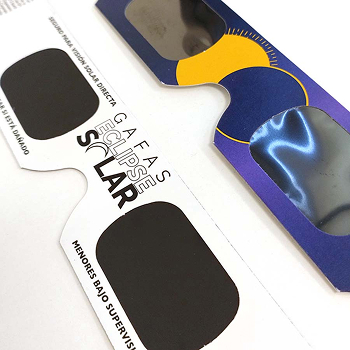
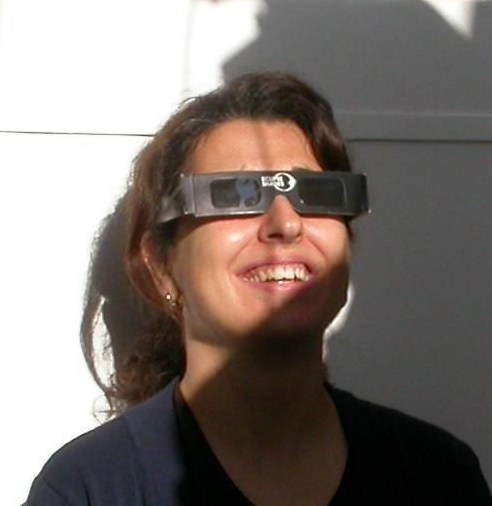
So-called "eclipse glasses" (purchased from specialised shops and planetariums) are designed to allow the Sun to be observed safely for short periods of time, well under one minute. They should be used only if they are in good condition, with no scratches, holes, abrasions, tears or creases. It is advisable to test them beforehand by looking at an incandescent light bulb.
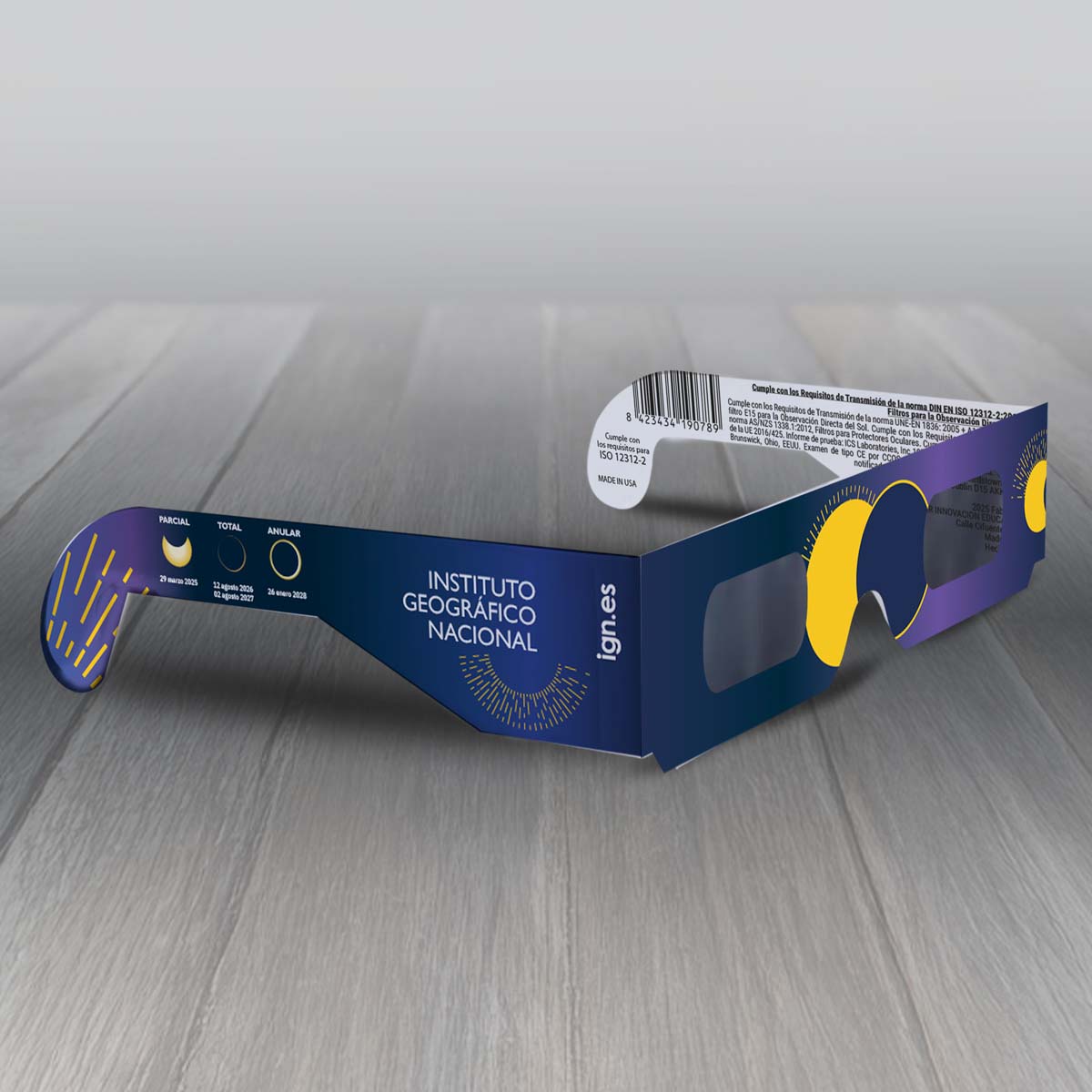
If you need to purchase glasses for observing the eclipse, the CNIG’s points of sale and its Online Shop offer glasses for sale that will allow you to safely observe eclipses and sunspots without risk.
Much has been said about the use of filters for observing the Sun. There are professional filters designed for this purpose, which can be used safely. Their drawback is that they can be expensive, but there are very important reasons for this. First, they reduce the amount of light to a level suitable for use by the human eye. Second, they reduce light across all wavelengths (from infrared to ultraviolet), taking particular care to adequately filter the radiation most harmful to the human eye. They must reduce the Sun’s visible radiation by a factor of at least 30,000 (thirty thousand!), lowering its brightness to that of a first-quarter Moon. Near infrared radiation (up to 1.4 micrometres) is reduced by several hundred times.
“Home-made” filters are strongly discouraged. Items such as exposed photographic film, old floppy disks, X-ray films, sunglasses, CDs, smoked glass, welding goggles, and inexpensive filters for binoculars and telescopes have all been used. Of all these, only high-grade welding glass or filters (grades 12 to 14) could be considered acceptable, although their optical quality often leaves much to be desired. The others either do not reduce radiation by the required factor or fail to filter adequately across the full range of wavelengths to which the human eye responds. As an anecdotal example of the danger of such improvised systems, consider sun-exposed (and later developed) black-and-white photographic film: in the past, it contained sufficient silver to act as a “reasonable” filter (by folding the film several times), but nowadays some films use dyes instead of silver and have therefore lost all their protective power as solar filters; one would first need to ensure that the film contains silver. Other types of film (colour, slide film) are entirely unsuitable.
In any case, observing the Sun—even with a good filter—is still somewhat dangerous, as a momentary lapse could result in looking at the Sun without the filter. It is not unreasonable to imagine, for instance, a child observing the Sun with a filter and, quite innocently, deciding to take a quick look by moving the filter aside. There is nothing safer than projecting the image of the Sun, unless one knows exactly what one is doing and has appropriate professional filters.
How can you tell if eclipse glasses are safe?
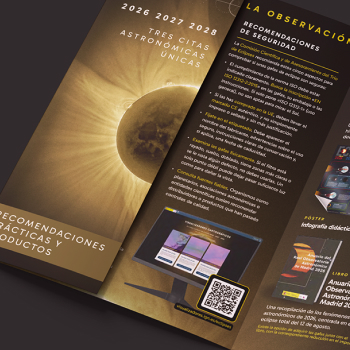
Consult the recommendations of the Scientific and Advisory Committee of the Eclipse Trio to check whether your glasses comply with the relevant regulations and therefore pose no risk to your eyes.
Observation by projection of the Sun’s image
To avoid any accidents, we must insist once again: the Sun or a solar eclipse should never be observed by looking directly at the Sun, but rather by projecting the image of the Sun onto a sheet of paper, a screen, a wall or a ceiling. By acting through diffusion, the surface re-emits only a very small fraction of the light it receives—just the light that has passed through the aperture. Even looking at the Sun through very dark filters involves risks and is not recommended.
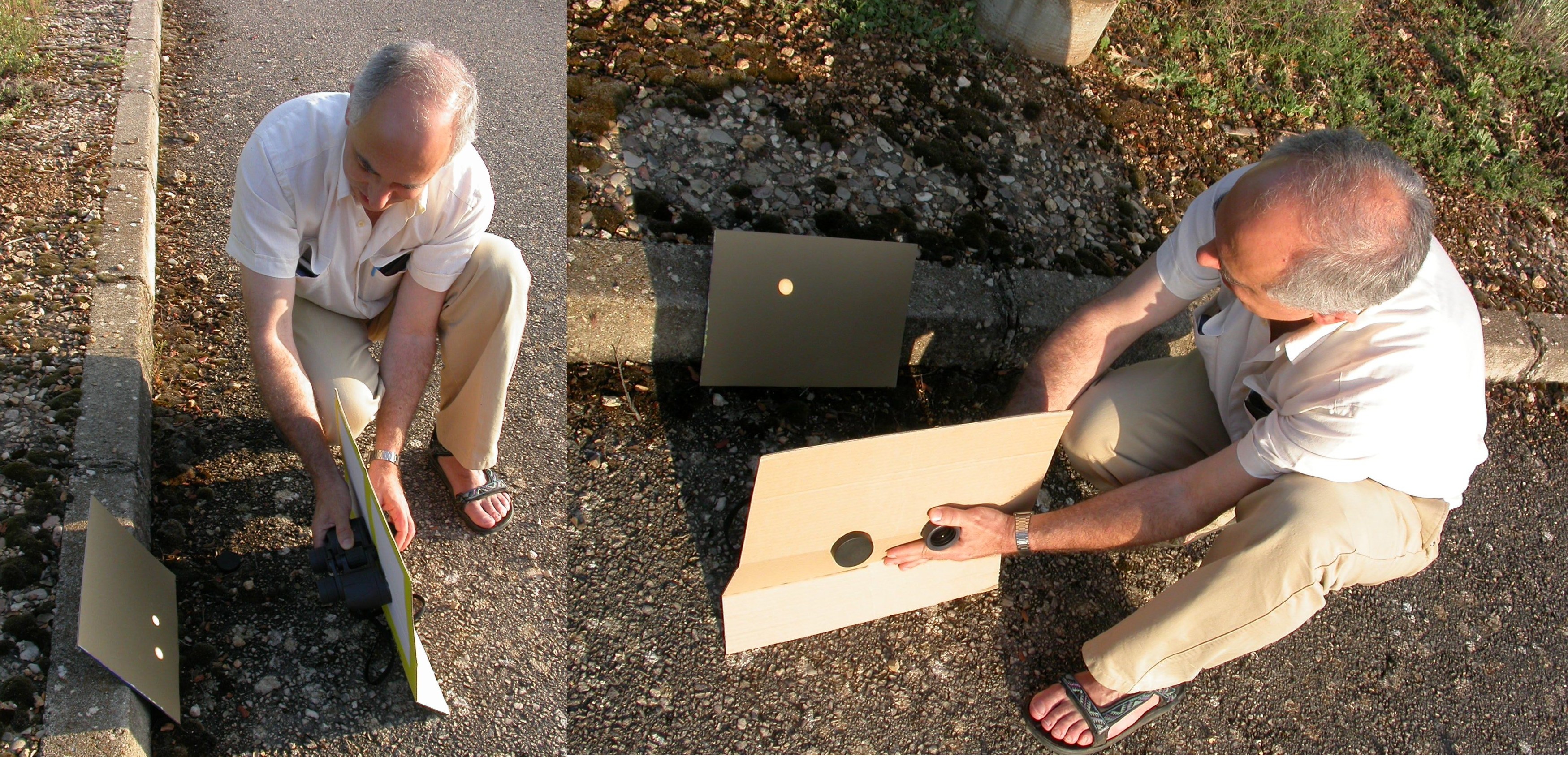
The simplest method, although less visually rewarding, consists of using two opaque pieces of card, one of which has a small hole made in it. With your back to the Sun, the perforated card is held so that the Sun’s rays strike it more or less perpendicularly, allowing the light passing through the hole to be projected onto the second card, which acts as a screen and is placed several hand spans away, parallel to the first. Depending on the size of the hole, the image will appear sharper or more blurred, and brighter or dimmer. The distance between the two cards also depends on the hole size. It is advisable to experiment with holes of different sizes until a satisfactory result is obtained.
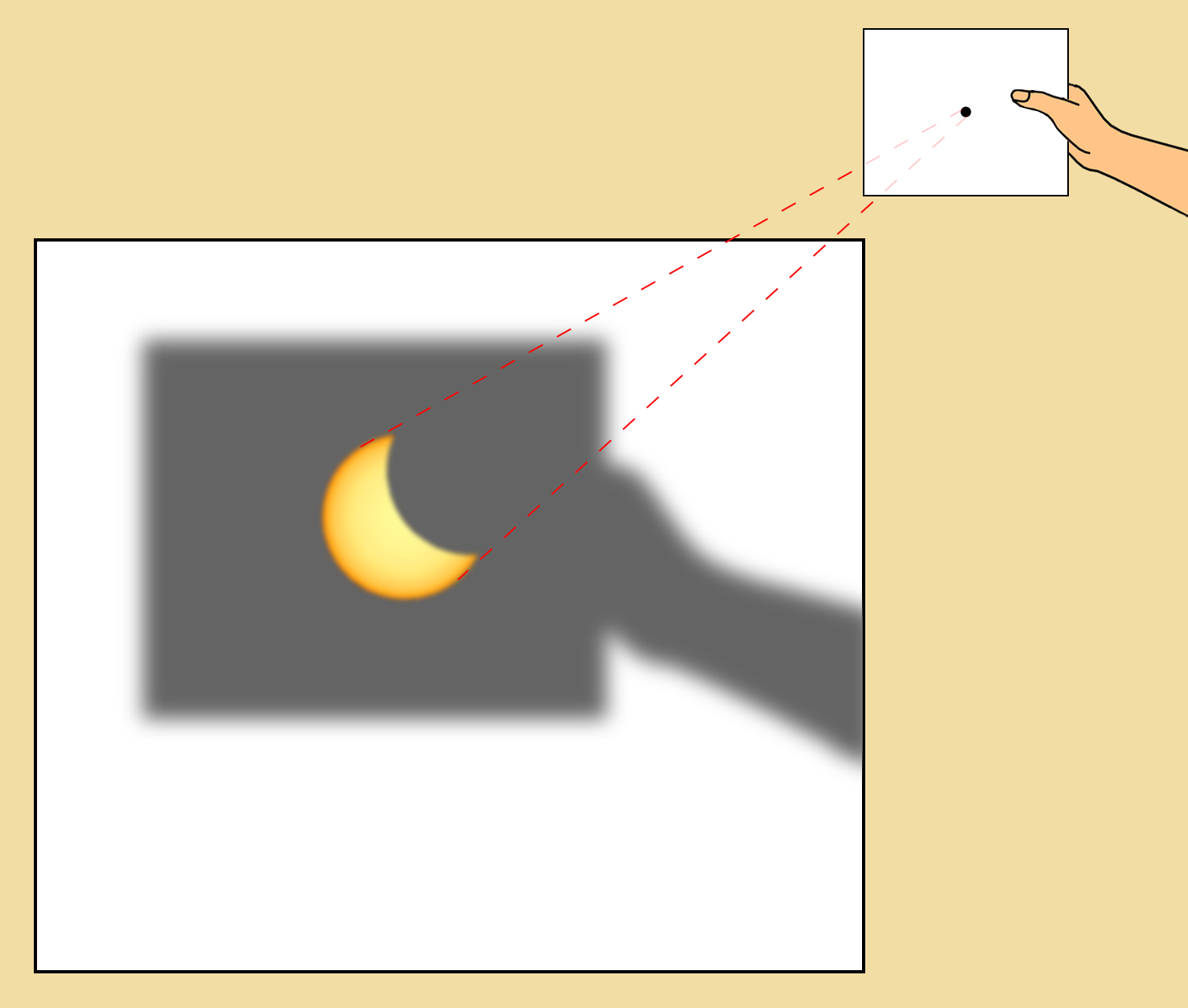

A variation of the above method consists of projecting the image of the Sun onto a wall using a hand mirror completely covered with paper in which a hole about half a centimetre in diameter has been cut. The shape of the hole does not matter—in fact, it is interesting to make several (for example, one round, one square and one triangular) and observe how the image projected by each onto the chosen surface has the same shape: a disc if the Sun is uneclipsed, or a partially darkened disc if it is partially eclipsed. The size of the hole is important: the larger it is, the brighter but more blurred the projected image will be. Therefore, it is advisable to experiment with holes of different sizes to find the optimal one. The optimal size also depends on the distance of the projection surface (wall, ceiling or screen). When observing an eclipse, as the Sun becomes increasingly eclipsed, it may be advisable to use larger holes. This completely safe method has the added advantage of allowing a group of people to observe the phenomenon at the same time, encouraging discussion and providing entertainment during the long duration of the eclipse.
If the projection is carried out using binoculars or a small telescope, the resulting image will be much brighter, but additional hazards must be taken into account. One is that excessive heating of the instrument (especially the eyepiece) may damage it, so it should be allowed to cool for a while after every few minutes of observation. Another risk is that someone (perhaps a child) might attempt to look through the instrument, which would almost certainly result in blindness in that eye. For this reason, it is advisable to place the projection screen on the ground, oriented perpendicular to the light beam. The telescope or binoculars should be aligned so that the image is projected onto the screen, and the focus should be adjusted until a sharp image appears. The apparent brightness of the image can be increased by preventing direct sunlight from falling on the projection screen, which can be achieved by some form of shielding, such as mounting the binoculars within a piece of card.