Eclipses in Art and Mythology
Eclipses in art
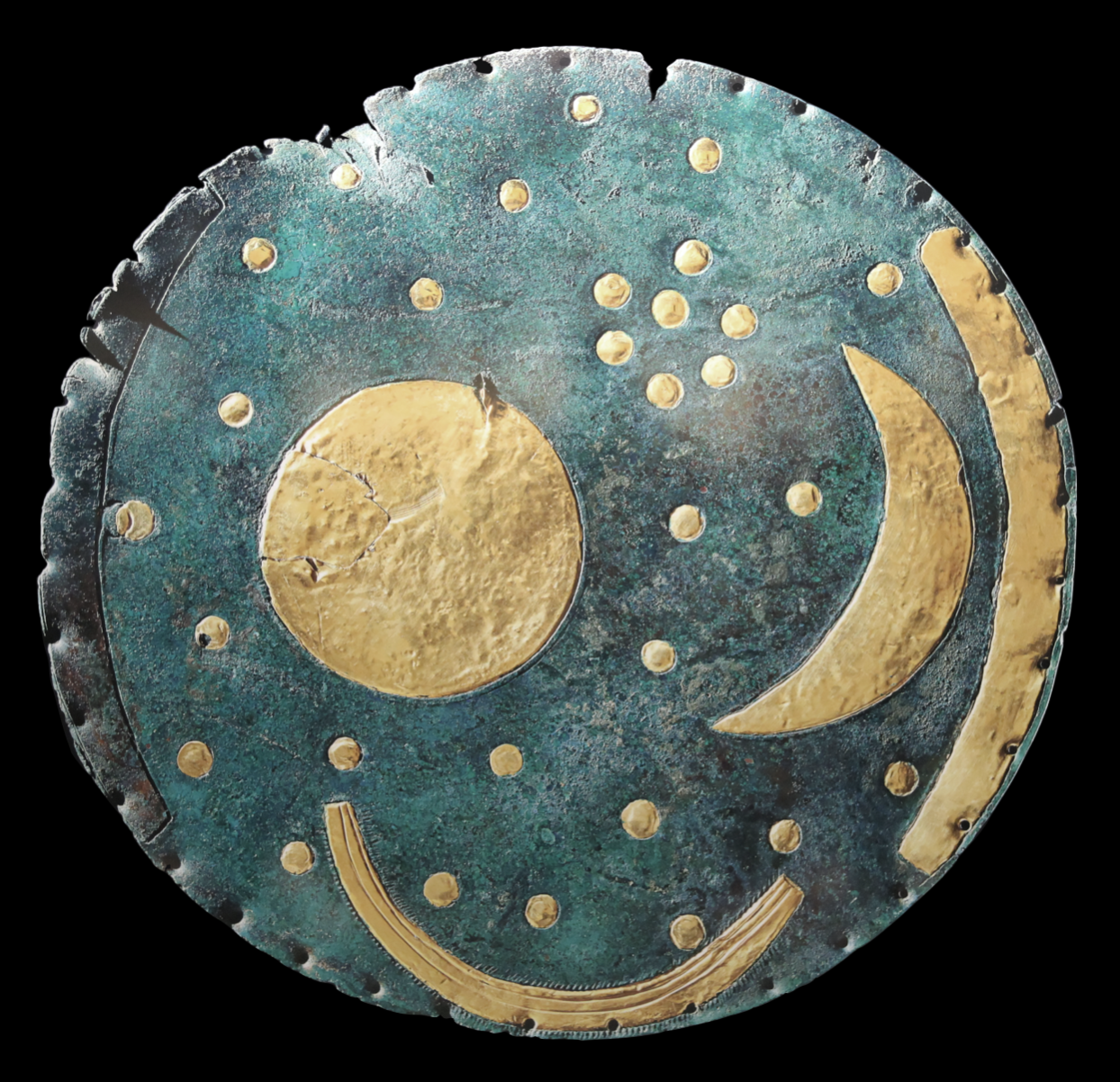
Human fascination and curiosity regarding eclipses throughout history have been reflected in a wide variety of artistic representations. One of the earliest portable representations of the Sun and the Moon, together with other astronomical elements, can be found on the Nebra Sky Disc, a Bronze Age artefact dating back to the second millennium BC. This metal disc shows a clear depiction of the Sun, the Moon and even the Pleiades.
One of the most influential solar eclipses in history, and at the same time one of the most debated, is the one that tradition associates with the crucifixion of Christ, possibly in the year AD 33. The evangelists Luke, Matthew and Mark describe a darkness that spread across the land during the hours preceding Christ’s death. However, no total solar eclipse lasts for several hours and, more importantly, the Crucifixion took place during Passover, which according to Jewish tradition coincides with the full Moon. This makes a solar eclipse astronomically impossible on that date. It has been suggested that the darkness may have been caused by dust suspended in the air, which can significantly dim the Sun and is relatively common in early April.
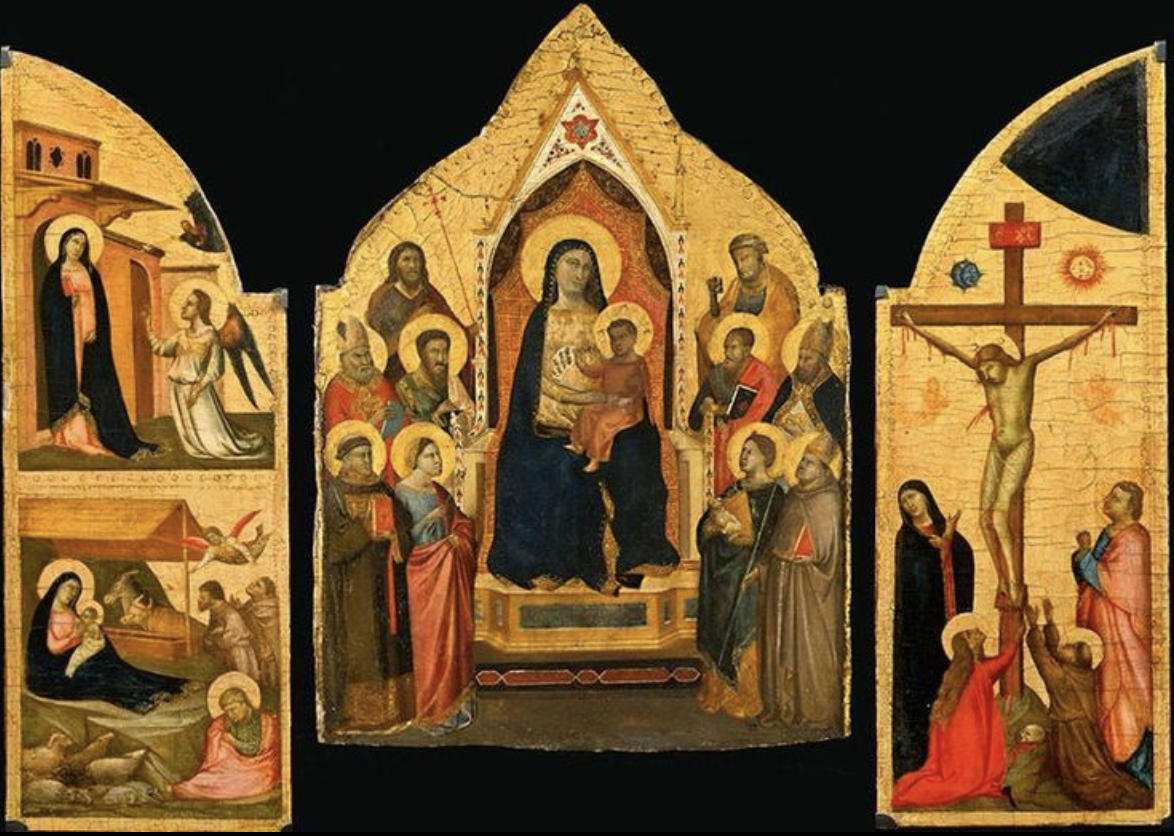
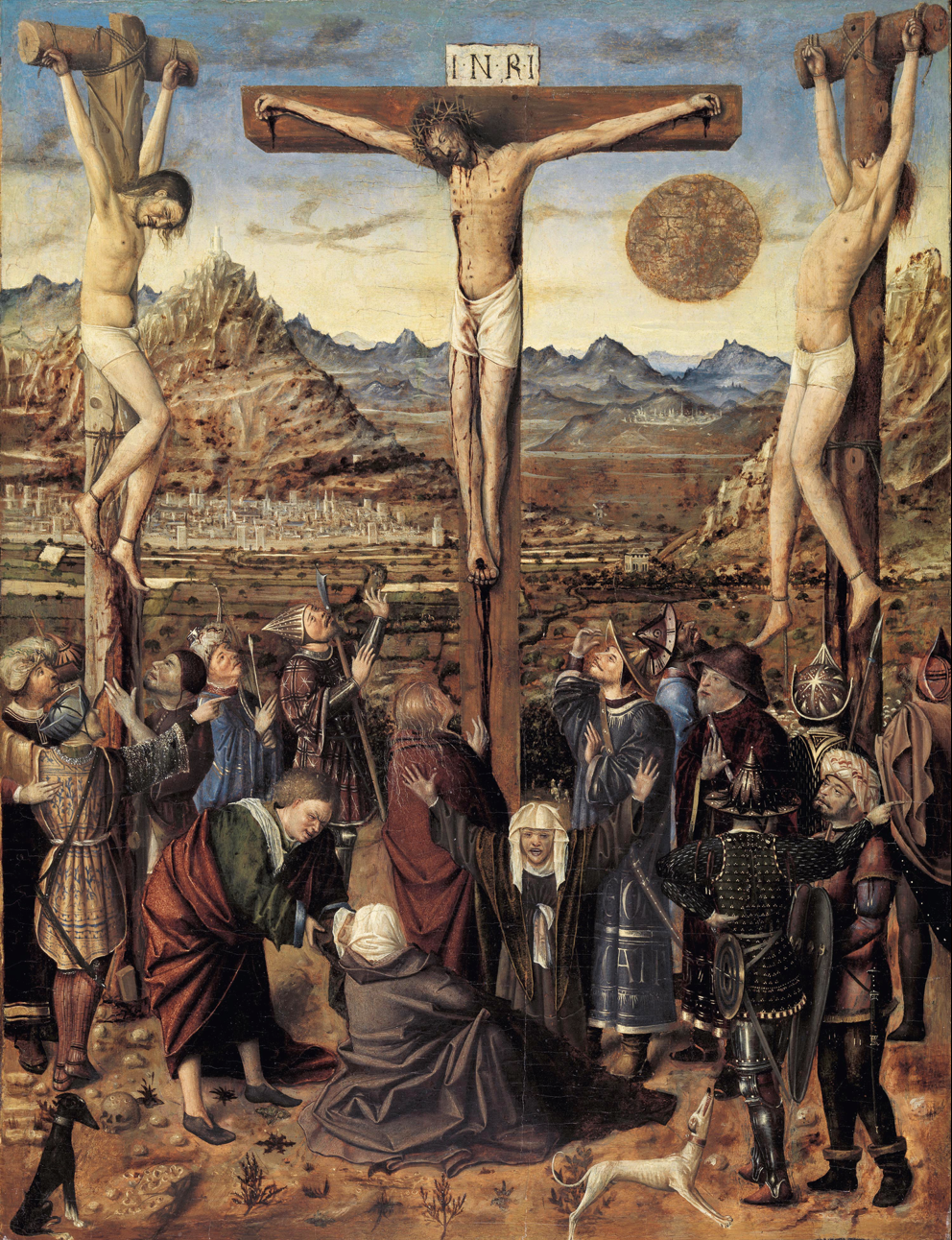
The Italian Trecento painter Taddeo Gaddi depicted the Moon approaching the Sun above the Cross in a triptych now housed at the New-York Historical Society. Above the two celestial bodies we see a dark wedge, alluding to the shadow cast by the Moon during a solar eclipse. Another representation of the supposed eclipse accompanying the Crucifixion appears in a panel by a 15th-century Valencian painter, now displayed at the Museo Nacional Thyssen-Bornemisza. The Sun is shown with an ochre tone and a cracked surface, revealing the presence of the Moon in front of the solar disc. Despite this, the sky is not significantly darkened; the artist had probably never witnessed a total solar eclipse and was unsure how to represent it.
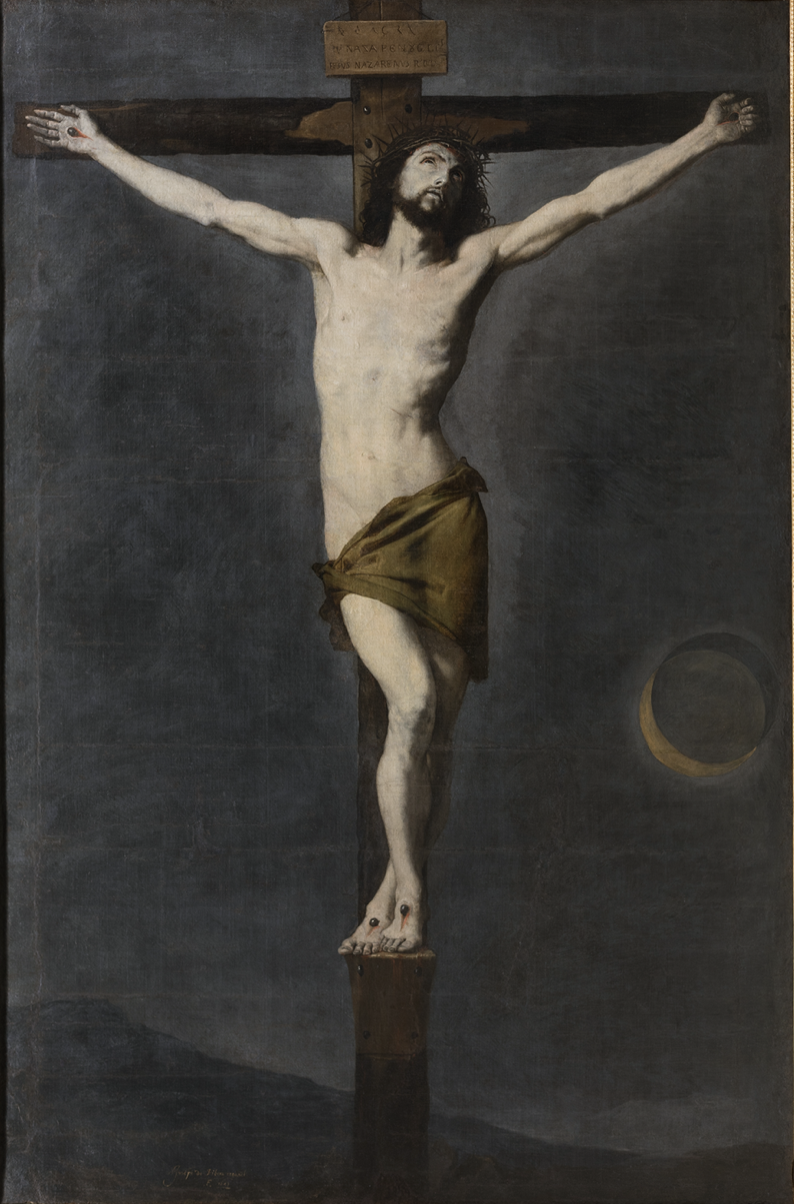
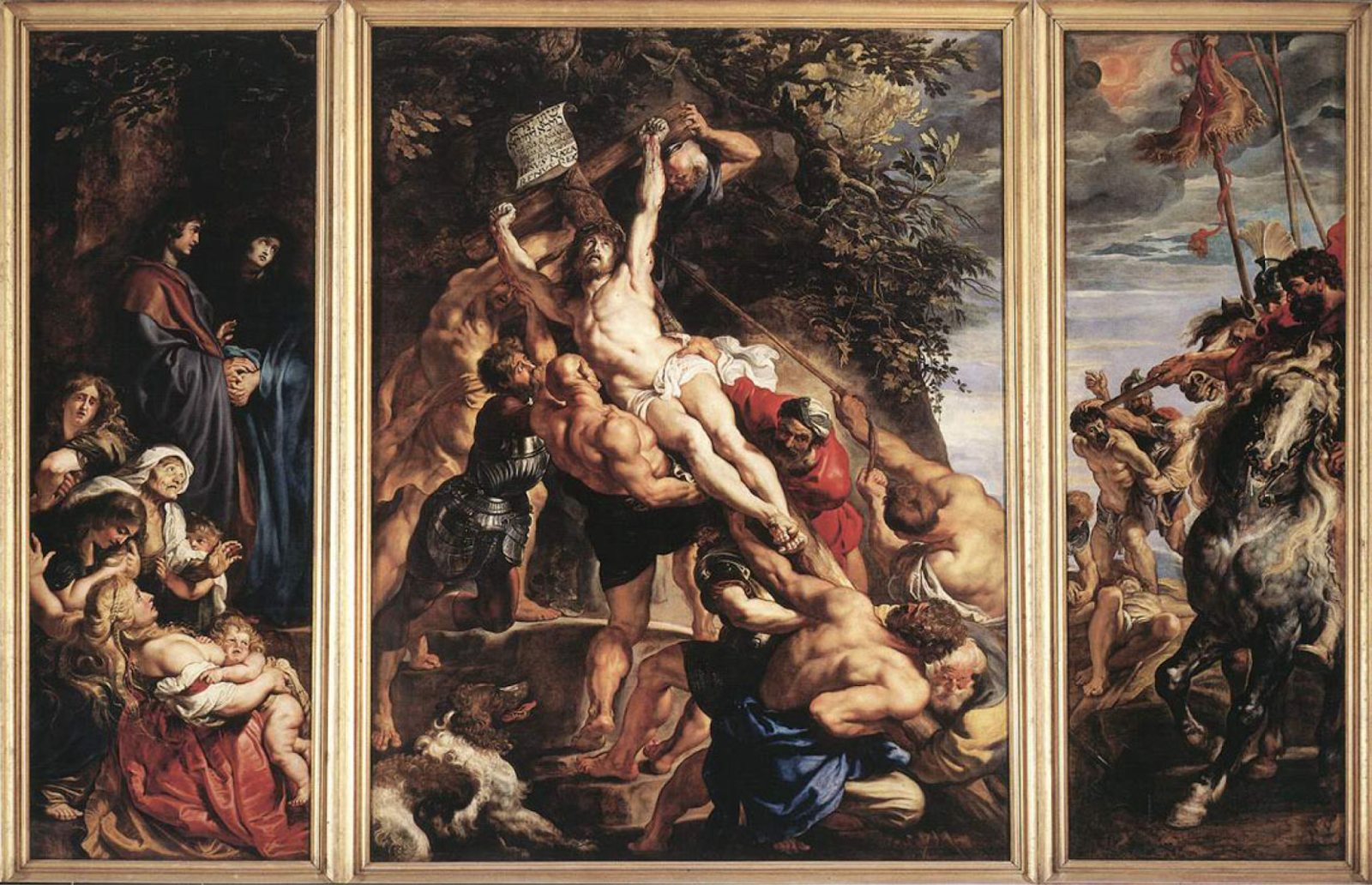
José de Ribera portrayed a stylised eclipse in his Christ Crucified, now held at the Museum of Fine Arts in Vitoria. The lunar disc appears translucent, allowing the outline of the Sun to be seen behind it. Although less realistic, this representation makes the phenomenon recognisable and adds dynamism to the scene. Similarly, in Rubens’ monumental triptych The Elevation of the Cross, painted for Antwerp Cathedral, a fairly realistic depiction of the beginning of a solar eclipse can be seen. Nevertheless, the Flemish painter had to outline the entire lunar disc—which is not visible at the start of an eclipse—in order to make both the Moon and the Sun easily identifiable.
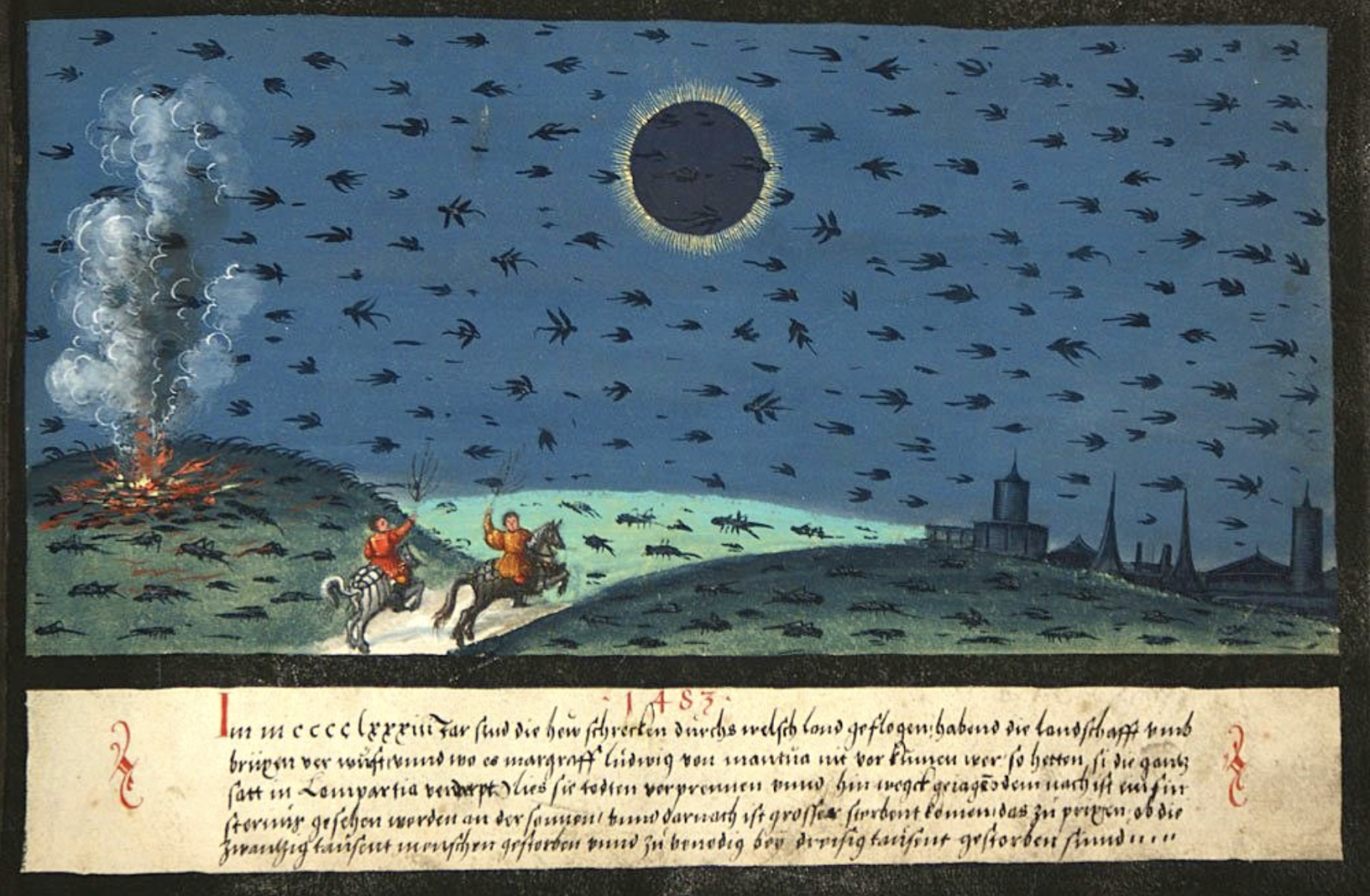
The Book of Miracles of Augsburg contains several depictions of eclipses alongside other extraordinary phenomena, both astronomical and biblical, as well as meteorological. This illuminated manuscript dates from the mid-16th century. One illustration depicts with notable realism the total solar eclipse of 1483, accompanied by the locust plague that struck Italy that same year, combining multiple exceptional—or “miraculous”—events recorded in contemporary chronicles.
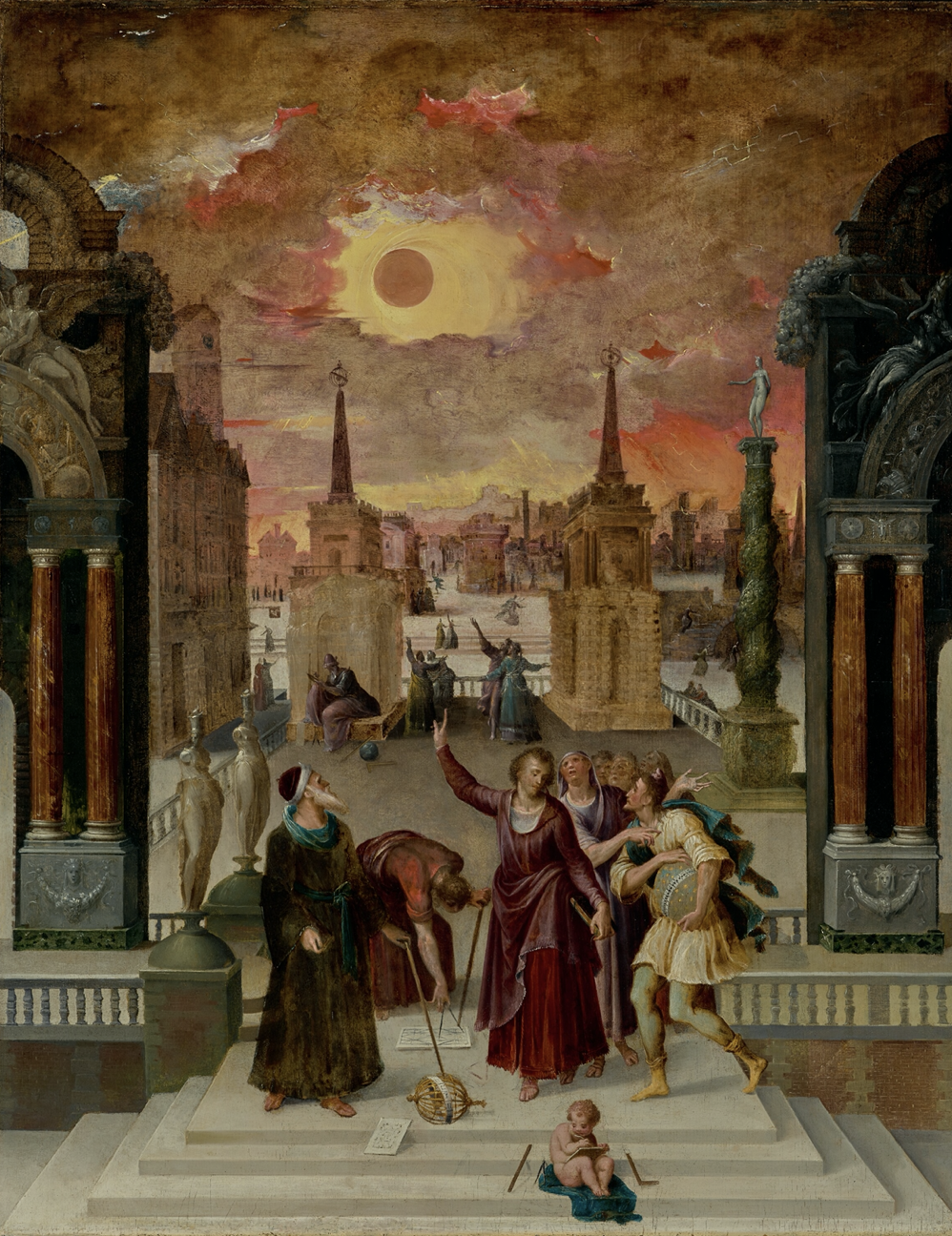
Among the most compelling representations of a total solar eclipse is Antoine Caron’s painting Dionysius the Areopagite Converting the Pagan Philosophers. Despite its religious title, the central figure raises his right hand towards the sky, pointing at what appears to be an eclipse—hence the alternative title Astronomers Observing a Solar Eclipse. The Sun is shown as a deep pink disc surrounded by yellowish nebulosity, possibly representing the solar corona during totality. Additional elements support this astronomical interpretation: a foreground figure holds a celestial globe, below which lie what appears to be an armillary sphere and a man performing geometric calculations; in the background stands a column topped by a sculpture that may represent Urania, the muse of astronomy.
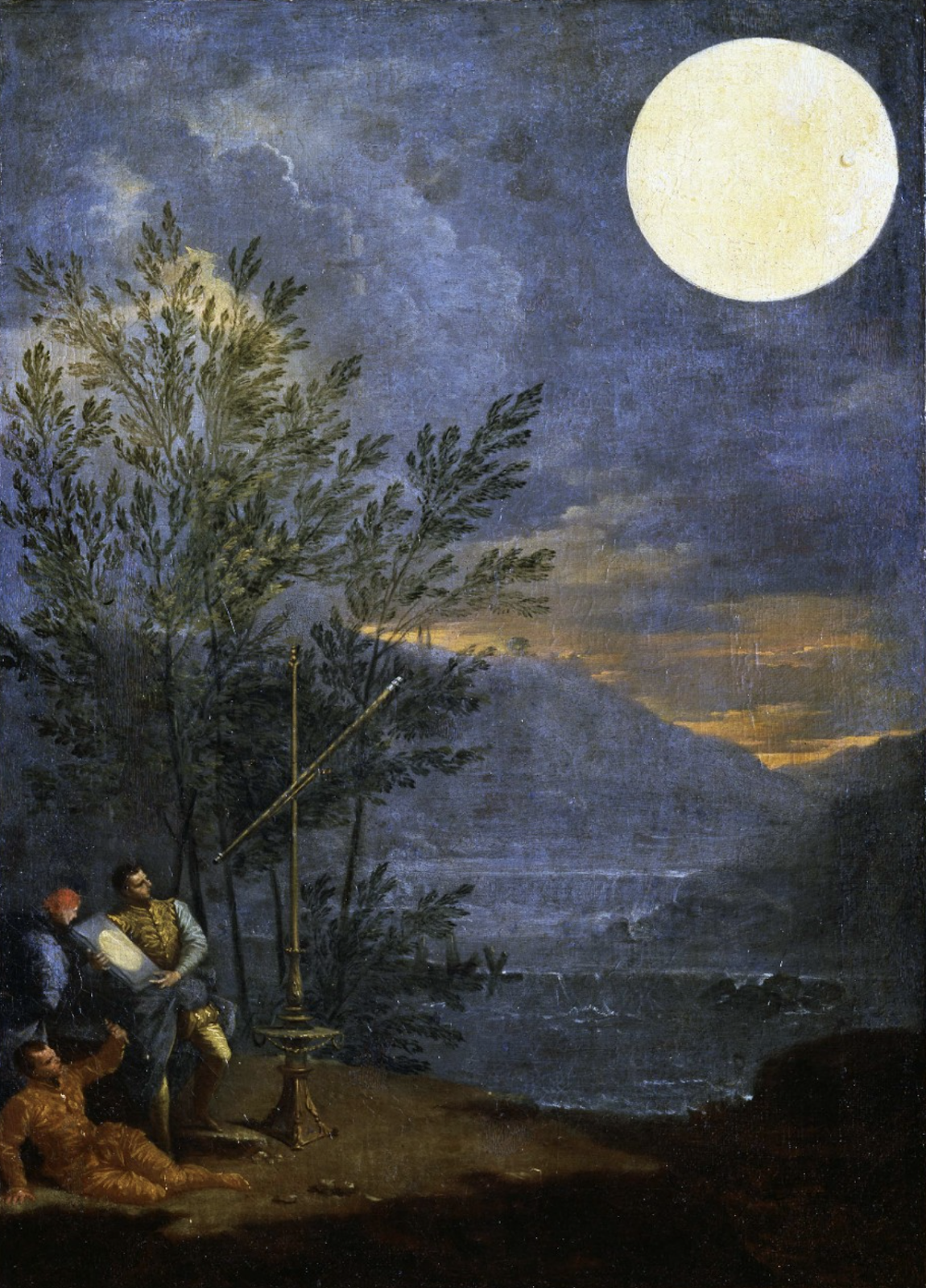
In 1609, Galileo first turned his telescope towards the sky, making a series of revolutionary discoveries. The telescope quickly became a fashionable symbol of knowledge and social status in art. In the early 18th century, Donato Creti devoted an entire series of oil paintings to Astronomical Observations, commissioned in 1711 by Count Luigi Ferdinando Marsili as a gift for Pope Clement XI to support the creation of an astronomical observatory in Bologna. Soon afterwards, a public observatory was inaugurated there under papal patronage. Creti’s paintings depict the Sun, the Moon, a comet and the five known planets of the time, set within evocative landscapes. The panel dedicated to the Sun illustrates the projection method using a telescope, particularly useful for observing eclipses.
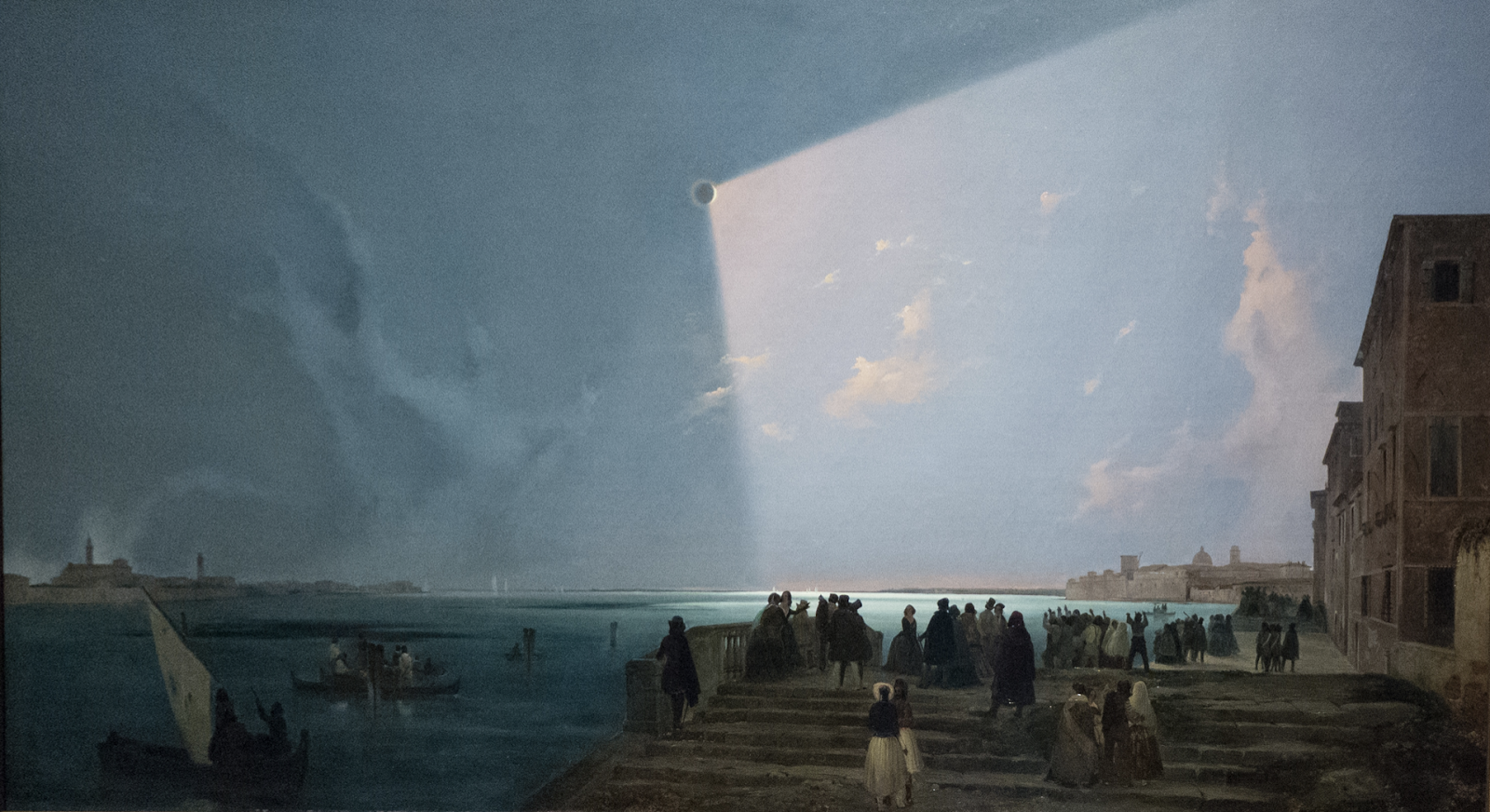
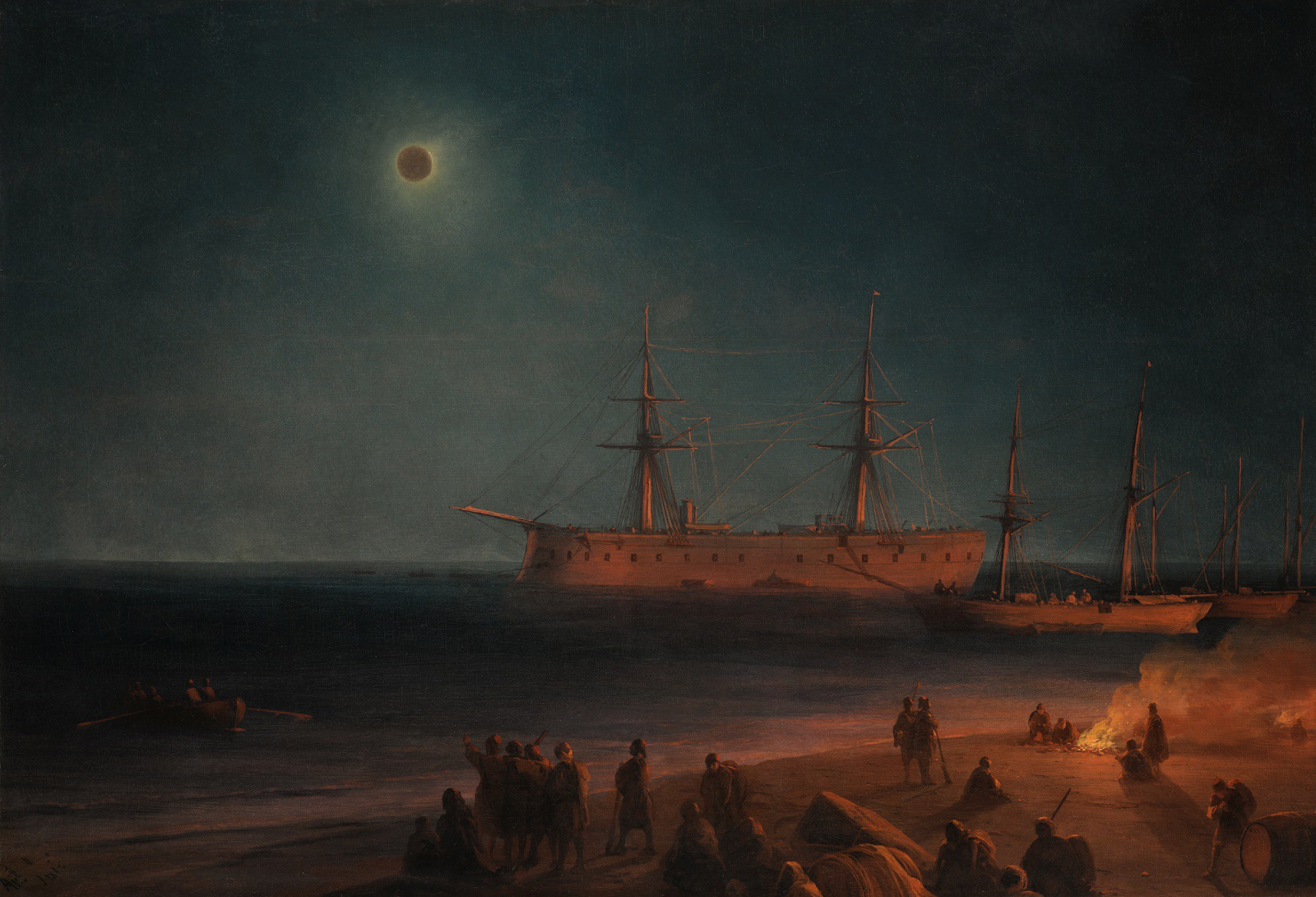
By the mid-19th century, under the influence of Romanticism, total solar eclipses appeared in art in sometimes picturesque ways. Ippolito Caffi’s Solar Eclipse in Venice depicts the eclipse of 8 July 1842 from an aerial viewpoint, attempting to capture the boundary between light and shadow, although the illuminated region is not entirely physically accurate. The Russian Romantic painter Ivan Aivazovsky, in contrast, depicted the total solar eclipse of 1851 observed from Feodosia in a nocturne-like and highly evocative manner.
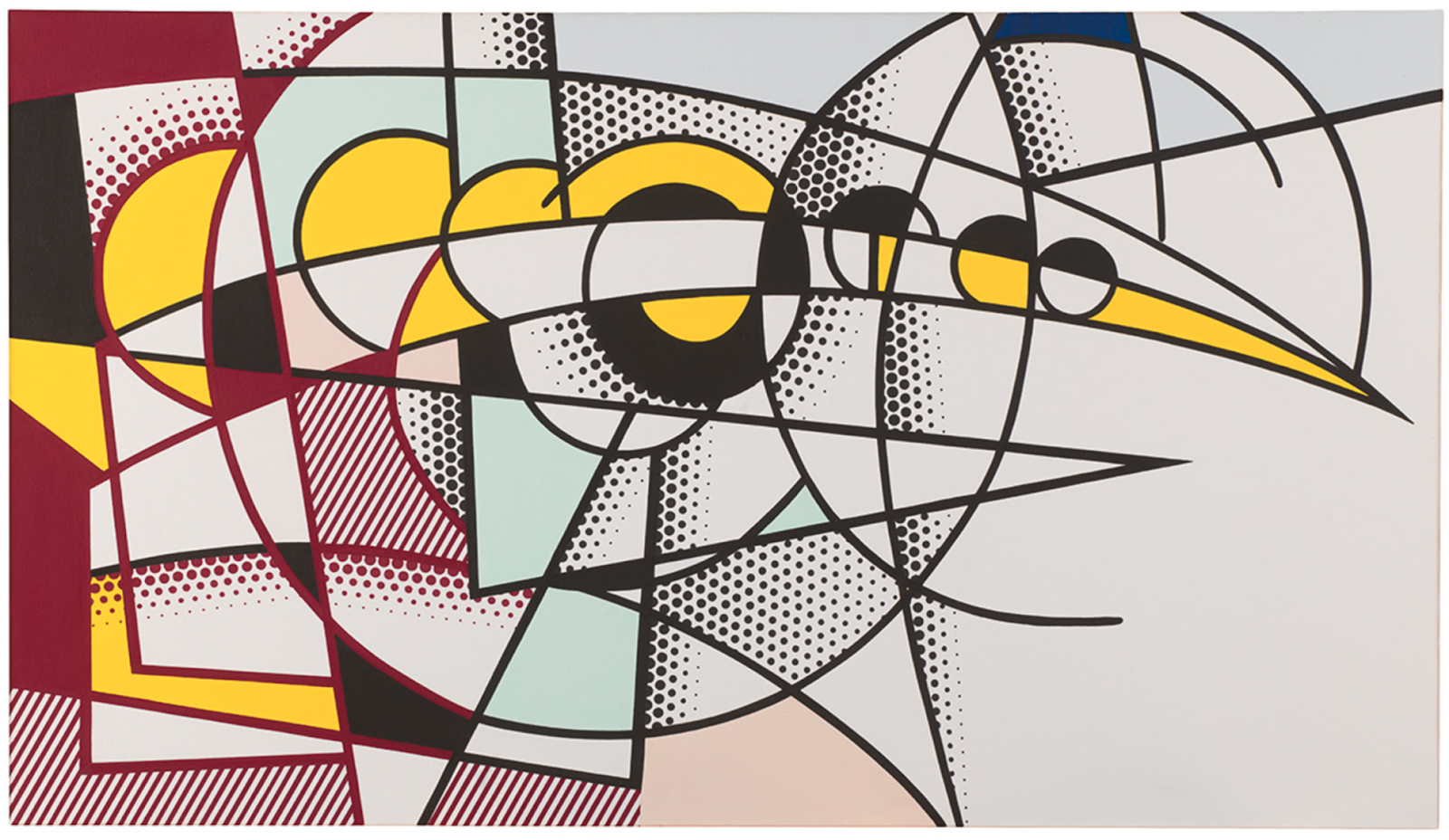
In the 20th century, artists continued to find inspiration in solar eclipses. Paul Klee, for example, produced a striking watercolour on the subject. In one of his later works, Roy Lichtenstein captured the kinetic nature of a total solar eclipse—the rapid arrival and passing of totality—through the superposition of circles and curves typical of pop art. Eclipses have continued to inspire artists across many periods and styles.
Eclipses in mythology
Eclipses are natural phenomena that for many centuries could not be explained scientifically, because humanity did not yet possess the necessary knowledge to do so. In addition, they have very striking characteristics, such as the Sun appearing to be missing a piece, or the Moon turning a blood-red colour. Total solar eclipses are undoubtedly the most awe-inspiring, since suddenly, without any apparent explanation, darkness falls in the middle of the day.
It is therefore not surprising that humanity, in its attempt to understand and even control these highly enigmatic and striking events, has given the most diverse explanations for eclipses, and that they have thus become part of the mythology of a great number of cultures across our planet. There are very many stories associated with total solar eclipses, and some of them are of great beauty. These are versions that may vary from one account to another, as they were often orally transmitted content which could therefore change over time or across different places or groups within the same culture.
The Sun devoured
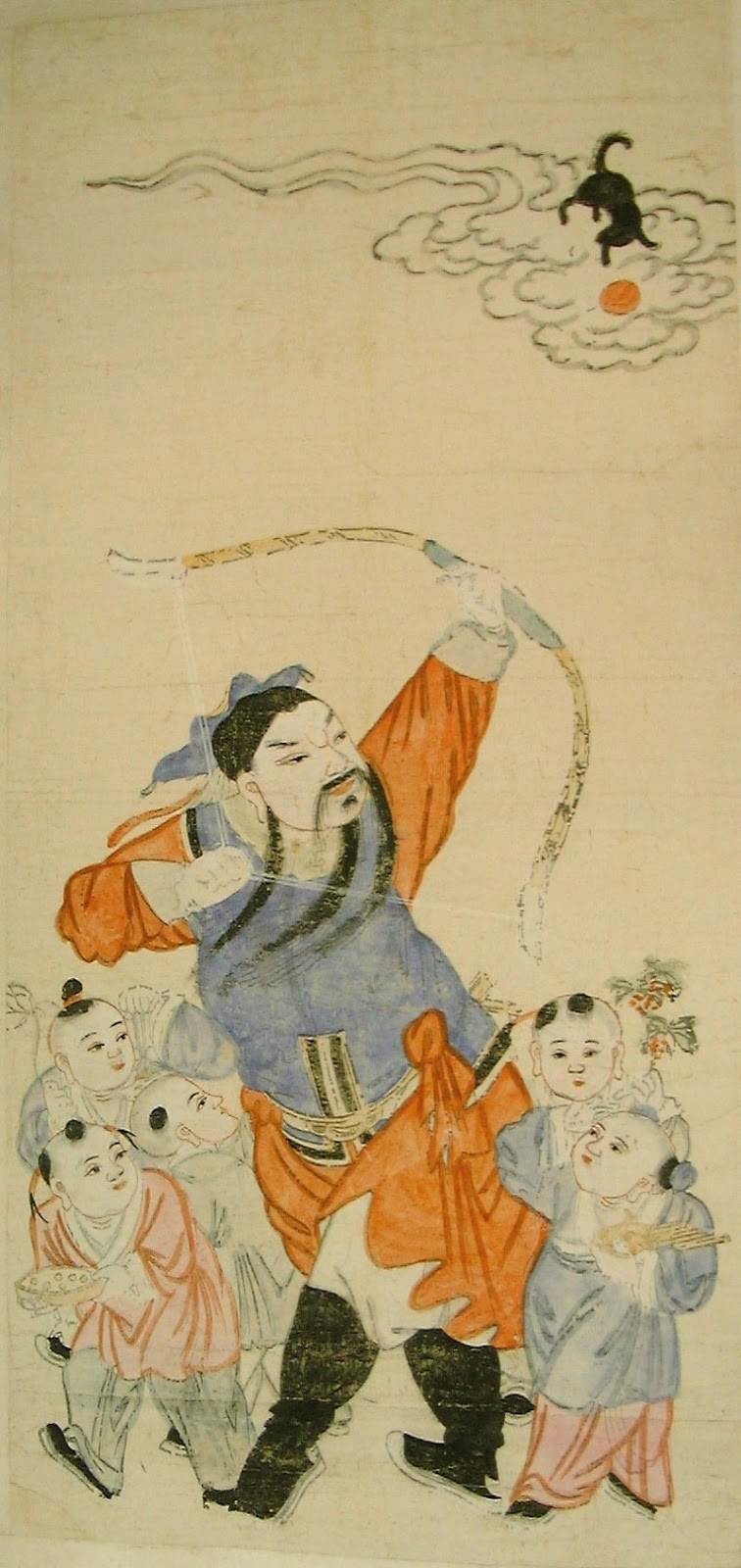
Some of the most frequently encountered mythological explanations are based on the idea that a being, animal or evil god tries to devour our star, and that one must somehow fight in order to recover the light. In Norse mythology, for example, it is a gigantic wolf called Fenrir (or according to some versions, two wolves named Sköll and Hati) who pursues the Sun in an attempt to devour it. In China there are stories that speak of the Sun being attacked by a celestial dragon, but there are also others that mention a heavenly dog called Tiangou. In fact, a figure from Chinese mythology, Zhang Xian, who is also the god of birth and male children, was the enemy of Tiangou, and is depicted shooting this dog of the heavens with bow and arrows to protect his offspring.
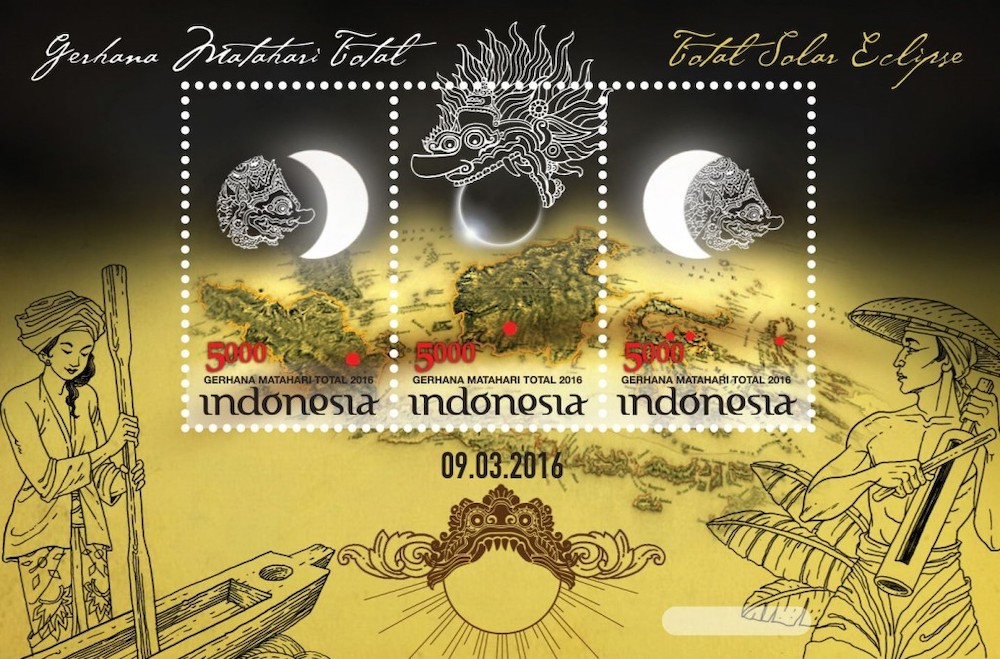
If we continue to travel around the world in search of this type of narrative, we encounter the Choctaw people, from present-day Oklahoma, who believe that the being that devours the Sun is an evil black squirrel; however, in Vietnam it is a giant frog, and in Andean mythology it is a puma. The Aztecs considered that solar eclipses occurred when the jaguar god Tepeyollotl bit the Sun and threatened to swallow it entirely. Whereas in Javanese and Balinese mythology it is the god of darkness, Batara Kala, who swallows the Sun.
Diverse as the beings and stories are, there is something that several peoples from very different parts of the globe have in common: to recover the Sun and avoid its death, they believed it was necessary to help drive away the evil being that was devouring it, so they beat drums, shouted or, in general terms, made as much noise as possible. This is a tradition that is still maintained today in some places.
Fear and conflicts of the Sun
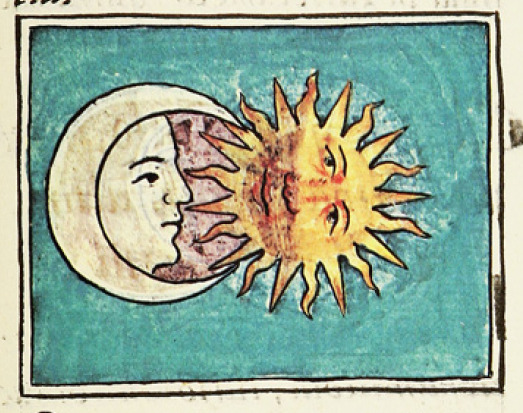
There are records in historical texts of the fear generated by eclipses. This is the case of the work "Historia general de las cosas de Nueva España", by Bernardino de Sahagún, also known as the Florentine Codex after the city in which it is currently preserved, and which is a bilingual encyclopaedia, in Spanish and Nahuatl, that gathers vast knowledge about pre-colonial indigenous peoples and early colonial Mexico. This text states that "When the Moon is eclipsed, it stands almost dark; it blackens; it becomes gloomy; then the Earth grows dark. When this happened, pregnant women feared miscarrying. They were greatly afraid that what they carried in their bodies would turn into a mouse. And as a remedy for this they placed a piece of itztli in their mouths, or put it at their waist, over the stomach. And so that the children in the womb would not be born without lips or noses, or with twisted mouths or squints, or lest a monster be born."
The Pomo people, from the north-western United States, give eclipses a name that means "the Sun is struck by a bear". They tell a story about a bear who goes for a walk along the Milky Way and on his way encounters the Sun, and both begin to argue about who is going to move to let the other pass. The argument turns into a fight, and this is what generates the eclipse.
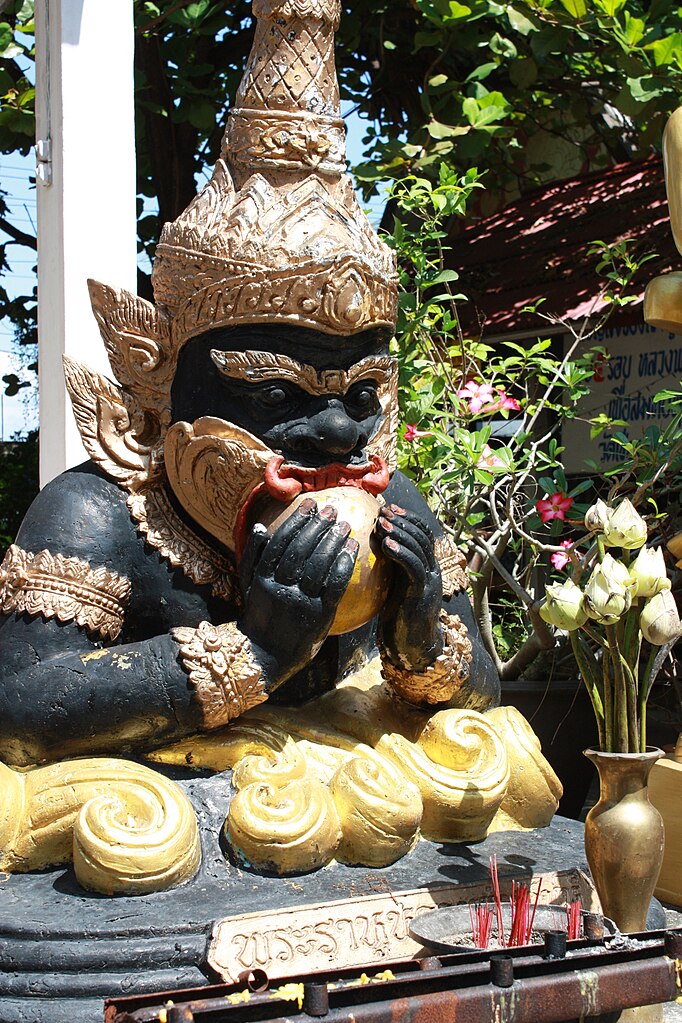
Another story, striking in how it even explains the Sun’s re-emergence, comes from India. There the demon Rahu (known as Phra Rahu in Thailand, where he stars in a similar story) is responsible for solar and lunar eclipses. In his desire to become immortal, Rahu stole a sip of the elixir of life, but was seen by the Sun and the Moon, who reported him to the god Vishnu. As punishment, the god cut off the demon’s head before the elixir could pass down his throat, thwarting his goal. Rahu’s head, which upon touching the elixir had indeed attained immortality, seeks revenge on the celestial bodies that betrayed him, and pursues them in order to devour them. Solar and lunar eclipses occur when he manages to catch them, but as he no longer has a body, the corresponding star reappears when the demon swallows it and it passes through his throat, thus fully explaining the phenomenon. To help the Sun in its struggle with Rahu, during eclipses people carry out a ritual by bathing in the holy waters of the Ganges.
The eclipse as a moment of love
Other legends and far less violent myths describe eclipses as an act of love, eroticism or dispute in the relationship between the Moon and the Sun. In some cases this is very explicit, as in Tahitian mythology, in which the Sun and the Moon are lovers who unite during an eclipse, but become lost in the intensity of the moment and create the stars to light their return to normality.
The Fon people, currently distributed across Benin, Nigeria and Togo, believe that the creator god Mawu-Lisa divided into a Sun god, Lisa, and a Moon goddess, Mawu, and consider eclipses to be the sexual union of both deities. In Germanic mythology, the warm female Sun and the cold male Moon are married. The Sun rules the day, and the drowsy Moon rules the night. In search of companionship, the Moon is drawn to his wife, and when they unite they create a solar eclipse.
On the other side of the world, in the oral traditions of the Euahlayi people, in south-eastern Australia, the Sun is known as a woman named Yhi and the Moon as a man named Bahloo. Yhi falls in love with Bahloo and pursues him across the sky, warning the spirits who hold up the sky that, if they let Bahloo escape, she will plunge the world into darkness, and this is what generates a total solar eclipse. To counter this ominous portent, a shaman recites magical chants.
The Batammaliba, from northern Togo and Benin, consider that an eclipse occurs when the Sun and the Moon are fighting. When this happens, the Batammaliba gather as a community and attempt to resolve their conflicts, hoping that the Sun and the Moon will do the same. Meanwhile, the Inuit tell the story of the Sun goddess, Malina, who is pursued across the sky by her brother, the Moon god, Igaluk. From time to time, he catches up with her for a brief instant, and everything goes dark. It is worth adding that in many stories the Sun is perceived as female and the Moon as male, although our current use of language may lead us to associate them the other way around.
Respect for the cosmos and the gods
In a more mystical way, the Navajo people consider eclipses to be a moment of renewal and a manifestation of the cyclical relationship between the Sun, the Moon and the Earth. Ancient traditional Navajo knowledge conveys that looking directly at the Sun is dangerous. Navajo elders firmly instruct their community to remain inside the hogan (their traditional dwelling) during an eclipse, thus ensuring that no one looks at the Sun. Traditional Navajo sit in silence and with reverence, a practice based on their deep respect for cosmic order.
There are also other narratives and legends that consider eclipses to be the result of a specific attitude or situation of a god represented by the Sun, or of other gods related to the star. This is the case of the Incas, who worshipped Inti, the Sun god. They believed Inti was generally benevolent, but considered that solar eclipses indicated that he felt anger and displeasure. A similar interpretation was held by the ancient Greeks, who believed eclipses were a sign that the gods were angry with humans and that the Sun was going to abandon the Earth, bringing enormous misfortune. This view is also found in Transylvanian folklore, according to which an eclipse occurs when the Sun, angered, withdraws and covers itself in darkness in response to the bad behaviour of humans.
Not only anger or wrath of the Sun generates eclipses; misfortune may also befall the king star. The Ojibwa and Cree peoples of North America tell the story of a child or a dwarf, named Tcikabis, who seeks revenge on the Sun for having burned him, and manages to trap it, which is the eclipse. Various animals try to free the star, but only the humble mouse manages to gnaw through the ropes and return it to its path. In the case of Aymara tradition, from South America, an eclipse means that the Sun is sick and close to death. The Aymara people lit bonfires on hill slopes to warm the Earth during the brief period in which the Sun was unable to do so. The Nuxalk people, from Canada, believed that the Sun was simply somewhat clumsy, and from time to time dropped its torch.
Eclipses, as striking events, are also present in beliefs and superstitions related to several of the religions we know best. Throughout history they have been regarded as symbols of ill omen or as indicators of events of great significance, a clear example being the supposed eclipse, already mentioned in this volume, which biblical sources state took place during the crucifixion of Jesus Christ. The sacred texts of Judaism also consider them in this way, and in Islam, in addition to viewing them as important portents, eclipses are treated as occasions of special contemplation and prayer.
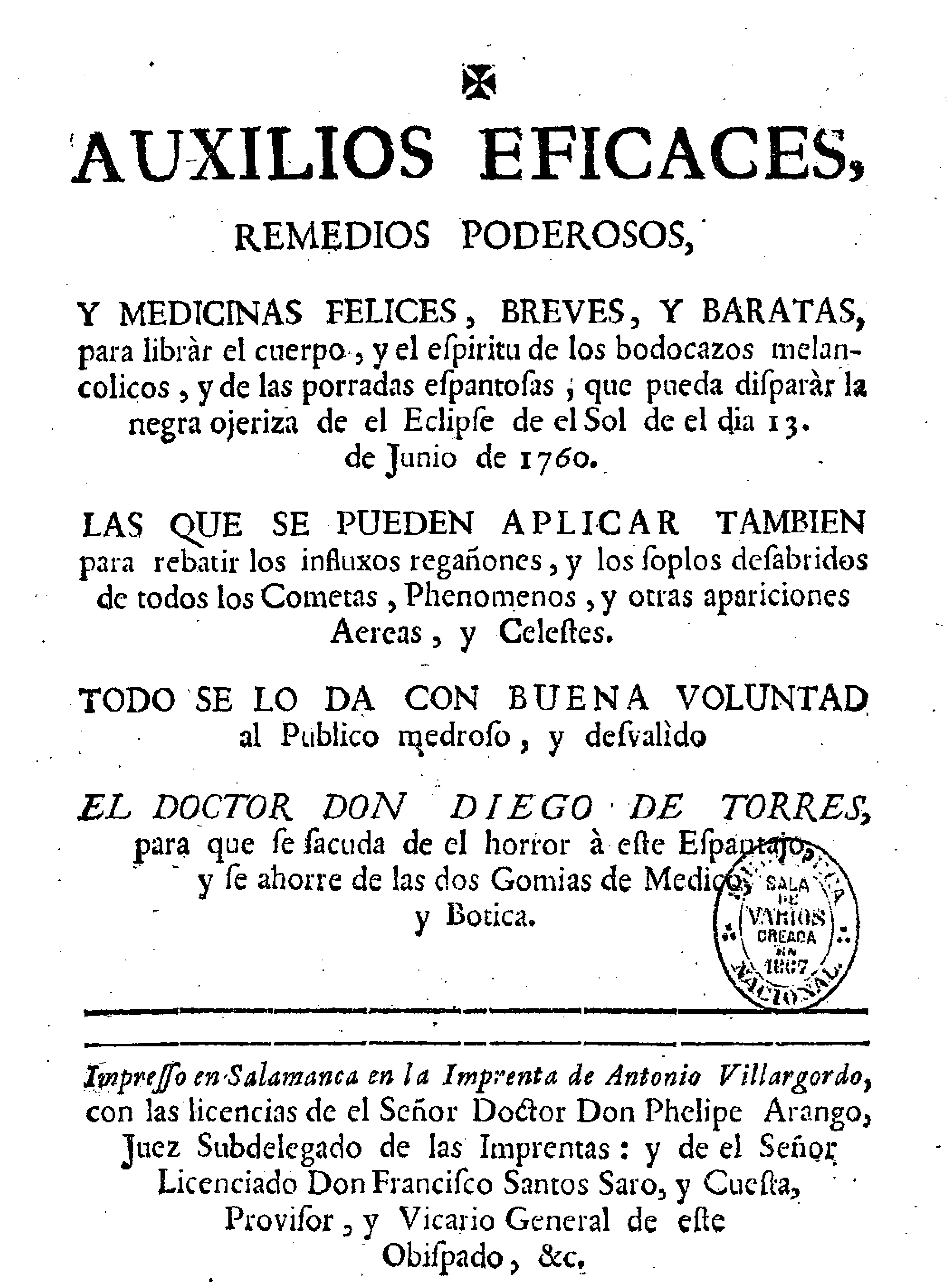
When considered in perspective, we observe how different human beliefs show that eclipses in general, and total solar eclipses in particular, have been a source of concern for many cultures and peoples. But it is also true that eclipses have prompted an unceasing search for answers, through fables and stories, related to some of humanity’s most transcendental questions.