The science of eclipses
The Sun, our star
The Sun is our star, located at the centre of the Solar System. In the context of our galaxy, the Milky Way, the Sun is a completely standard star: it has a low-to-intermediate mass within the range of possible stellar masses, it is in the stage of its life known as the main sequence, which is the longest and most stable stage of stellar evolution, and in the spectral stellar classification system it is of type G2V, with intermediate luminosity and temperature. In other words, there are billions of stars like ours distributed throughout the Milky Way, and many more if we consider other galaxies. And yet, in our immediate surroundings the role of the Sun is essential: its formation gave rise to the entire Solar System, its current mass accounts for 99.86% of the total mass of the planetary system, it is the main source of gravitational attraction and thus keeps the entire system bound together, and it is by far its primary source of energy. It is the brightest object in our sky, with a magnitude of −26.74, which means that very few astronomical objects or events can be visible during the day when it is above the horizon.
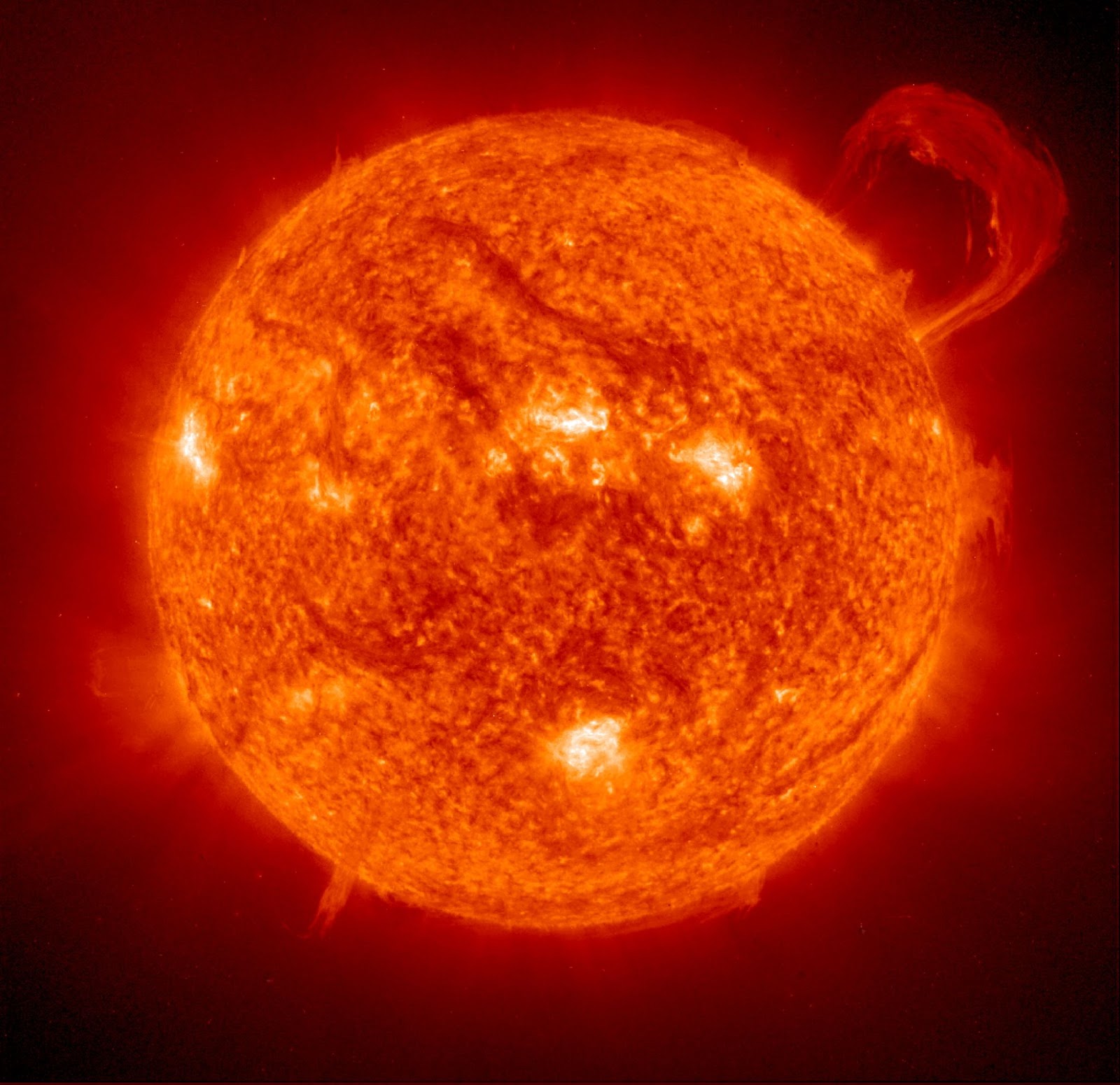
Our star is of intermediate size, with a radius of about 700,000 km, and therefore much smaller than supergiant stars such as Rigel (with a radius more than 70 times that of the Sun) or Antares (with a radius approximately 680 times that of the Sun). However, compared with the Earth it is extremely massive: it would take about 330,000 Earths to equal the mass of the Sun, and around 1.3 million Earths to fill its entire volume. In terms of distance, it lies about 150 million kilometres from our planet, which means that the light it emits takes about eight minutes to reach us.
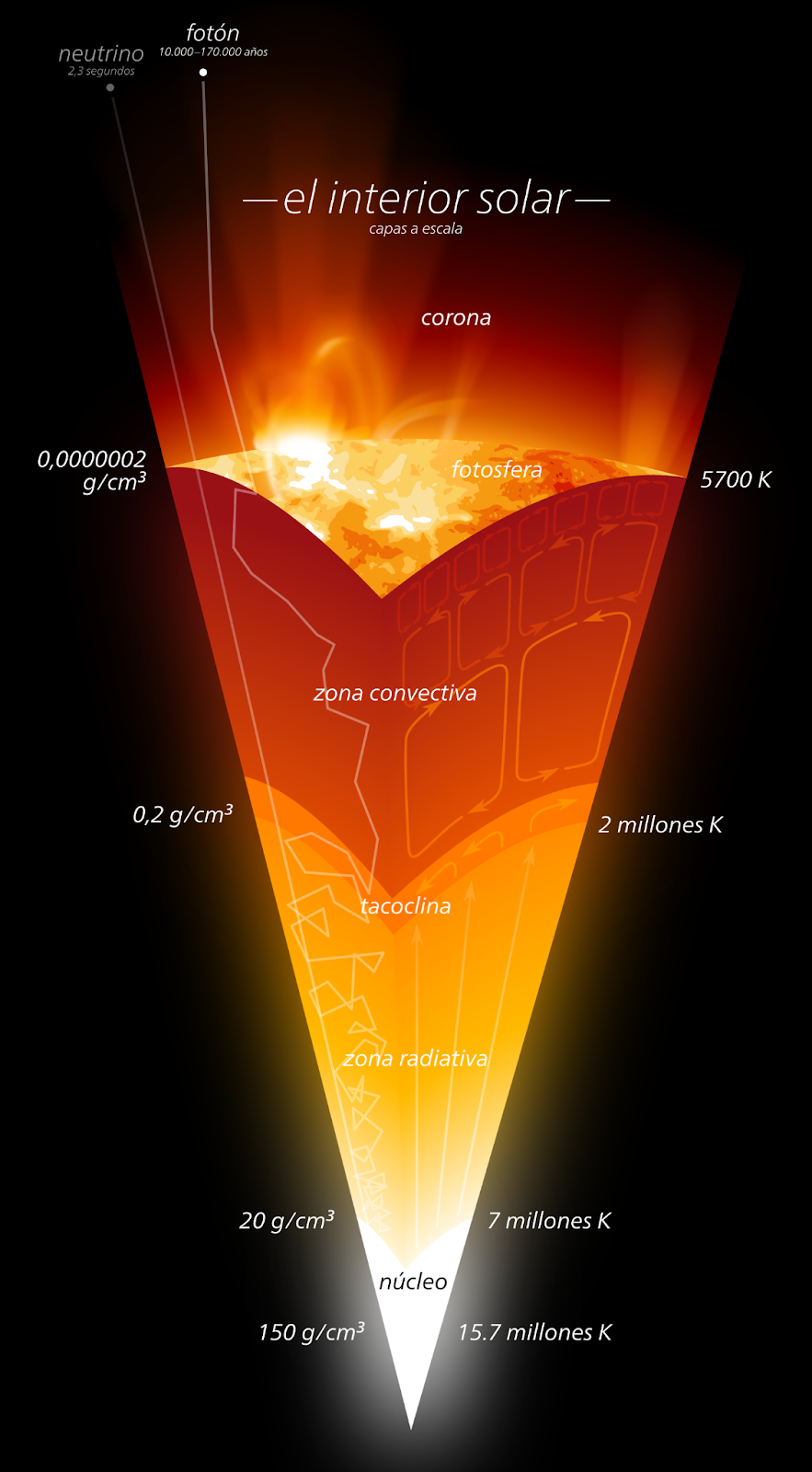
The Sun is a large sphere of gas, composed of 74.9% hydrogen and 23.8% helium, while heavier elements make up less than 2% of the total. Its structure consists of different regions or layers. At the centre lies the core, the hottest region, at over 15 million degrees Celsius, where nuclear fusion reactions occur, transforming hydrogen into helium and generating the Sun’s energy. The energy produced by these nuclear reactions keeps the star in equilibrium against gravitational collapse. Surrounding the solar core are the radiative and convective zones, separated by the transition region known as the tachocline. These layers transport the energy generated in the core to the outer layers, from where it is radiated into space. A photon produced in the solar core takes around 170,000 years to reach the upper part of the convective zone.
Above the convective zone lies the photosphere, at a temperature of around 5,500 degrees Celsius, and therefore much cooler than the solar core. This is the layer we consider to be the surface of the Sun, although it is not analogous to the Earth’s surface, as in this case we are dealing with gas. It is considered the surface because it emits most of the Sun’s visible light, and is therefore what we see from Earth with our eyes (once again, it is important to emphasise that one should never look directly at the Sun, due to the damage it can cause to our eyesight). The Sun is optically opaque towards the interior of the photosphere, and for that reason we cannot see the internal layers.
Above the photosphere are the two layers that make up what we call the solar atmosphere, which are transparent to us: the chromosphere and the corona. The chromosphere is a thin layer, with an estimated thickness of “only” between 3,000 and 5,000 kilometres, composed of low-pressure gases. The corona, by contrast, is the outermost layer of the Sun, formed by low-density plasma that extends millions of kilometres into outer space. It is also extremely hot, with temperatures exceeding one million degrees, and therefore far higher than the temperature of the photosphere. This enormous increase in temperature towards the exterior of the Sun, which cannot be explained by thermal mechanisms, remains one of the greatest mysteries of our star and is still an active area of research. The material in the chromosphere and corona is very tenuous, and normally we cannot perceive the visible light they emit because it is much fainter than that of the bright photosphere. The exception to this are total solar eclipses.
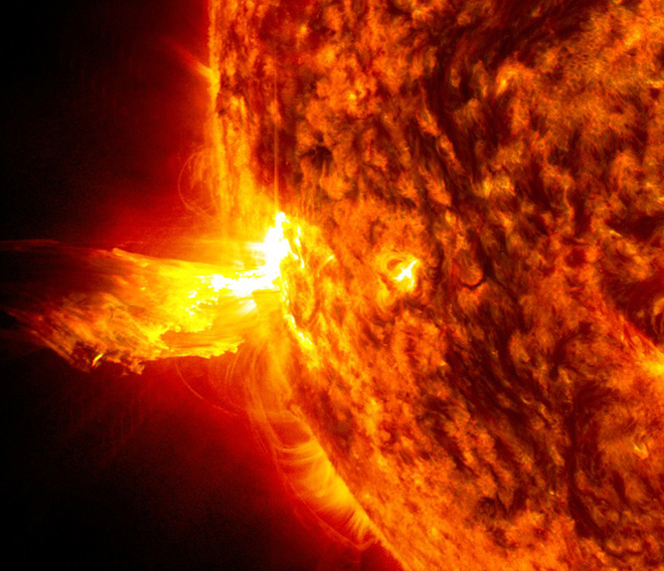
The Sun maintains significant magnetic activity, which generates intense phenomena on its surface and in its atmospheric layers. These include solar flares, large explosions that occur in certain regions of the solar atmosphere when vast amounts of energy are released due to local reconfiguration processes related to the Sun’s magnetic field. Solar flares emit large amounts of radiation into space and are often accompanied by coronal mass ejections, in which charged particles from the solar atmosphere — that is, plasma — are also expelled. Some of this material falls back onto the Sun, forming arc-shaped structures visible on its surface, while some is lost into space. The radiation and plasma emitted by flares and coronal mass ejections reach the Earth and, although we are protected by our own magnetic field, their effects are noticeable: they can affect satellites and high-altitude aircraft, and they produce the beautiful aurorae that can be seen near the poles. The solar magnetic field varies over time, giving rise to quasi-periodic cycles of solar activity lasting about 11 years, which are reflected in the average number of sunspots visible on its surface.
Study of the solar corona. Coronagraphs
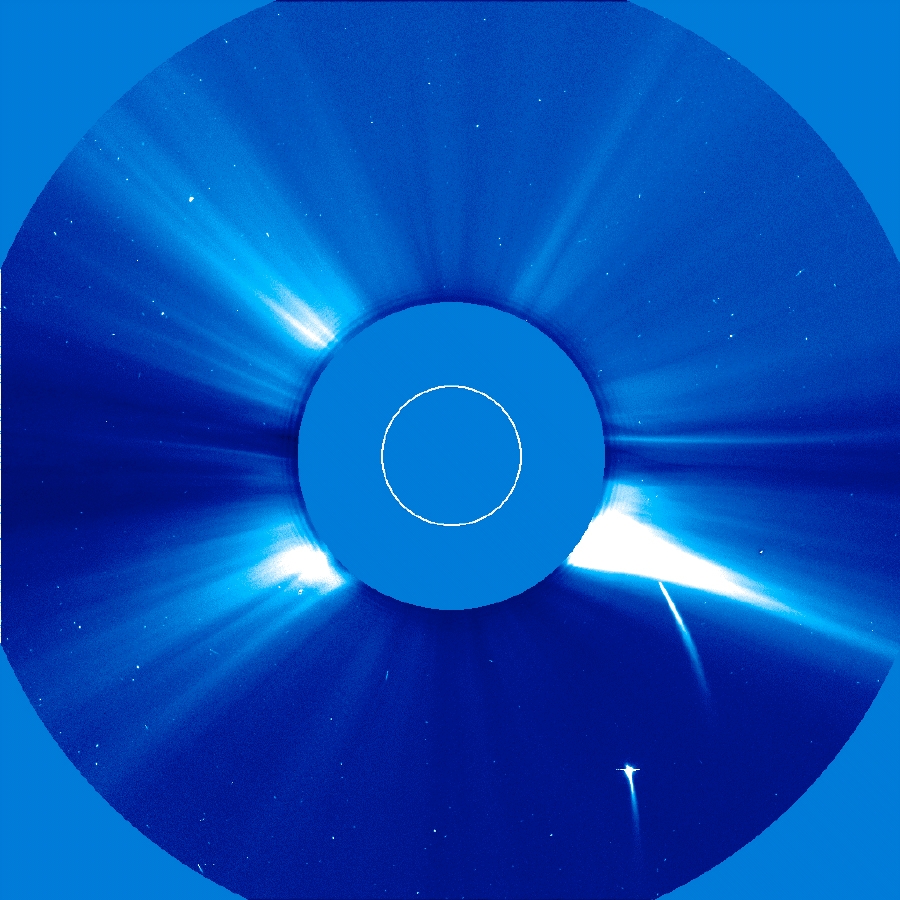
The luminosity of the solar corona amounts to only about a millionth of that of the Sun as a whole, making it normally impossible for us to perceive this layer directly. This was only possible during total solar eclipses, when the lunar disc blocks the rest of the star’s emission. To overcome this limitation, the French astronomer Bernard Lyot invented a device in 1931 known as a coronagraph, which simulates a solar eclipse by artificially blocking the light from the photosphere, thereby allowing the contribution of the corona to be distinguished. The coronagraph can be attached to a telescope, and its main component is an opaque disc that blocks the image of the Sun formed by another lens.
Most coronagraphs are used for the study of the solar corona, but instruments based on the same principle have also been developed, known as stellar coronagraphs, intended for observing faintly illuminated objects close to a star or another intense light source. These are used, for example, in the search for extrasolar planets or circumstellar discs around nearby stars, or in the study of galaxies hosting quasars or active galactic nuclei. Observatories that include coronagraphs include the Hubble Space Telescope (in particular in its near-infrared instrument NICMOS) and the James Webb Space Telescope (in its near- and mid-infrared instruments NIRCam and MIRI). These instruments also benefit from being located outside the Earth’s atmosphere, making them more efficient than ground-based observatories.
The Moon, our natural satellite
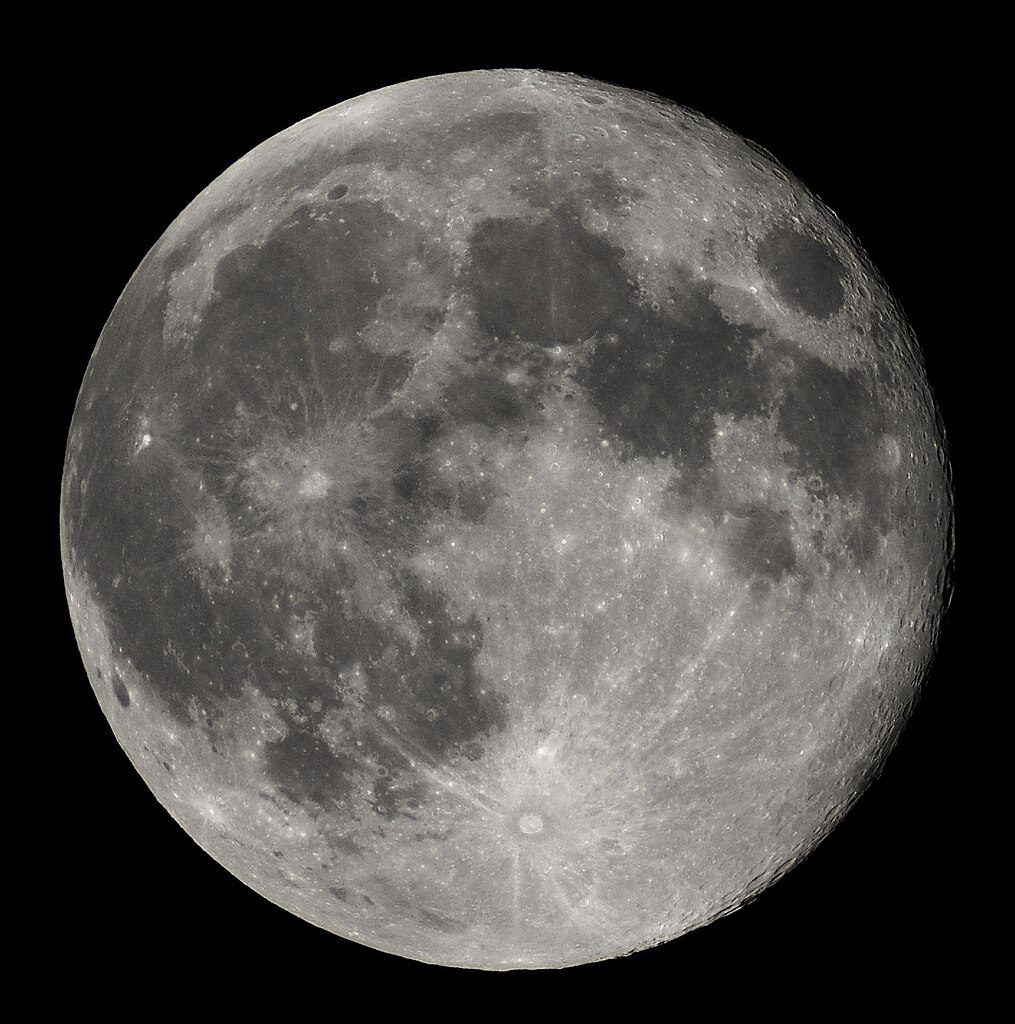
The Moon is Earth’s only natural satellite. It is a rocky body with no hydrosphere, atmosphere or magnetic field. The absence of an atmosphere and tectonic activity gives rise to its characteristic cratered surface, caused by impacts from various bodies throughout its history. The lunar maria also stand out — large plains of solidified lava.
The Earth–Moon system is an exceptional pair due to the size ratio between its components, as the Moon has a diameter roughly one quarter that of the Earth. This makes it one of the largest natural satellites in the Solar System relative to the size of the body it orbits, surpassed only by Charon, Pluto’s main satellite. This unusual size relationship may be linked to the origin of the Moon, which is thought to have formed from debris produced by a collision between the Earth and another large body in the early stages of Solar System formation. In absolute terms, the Moon is the fifth-largest satellite in our system, after Ganymede, Titan, Callisto and Io.
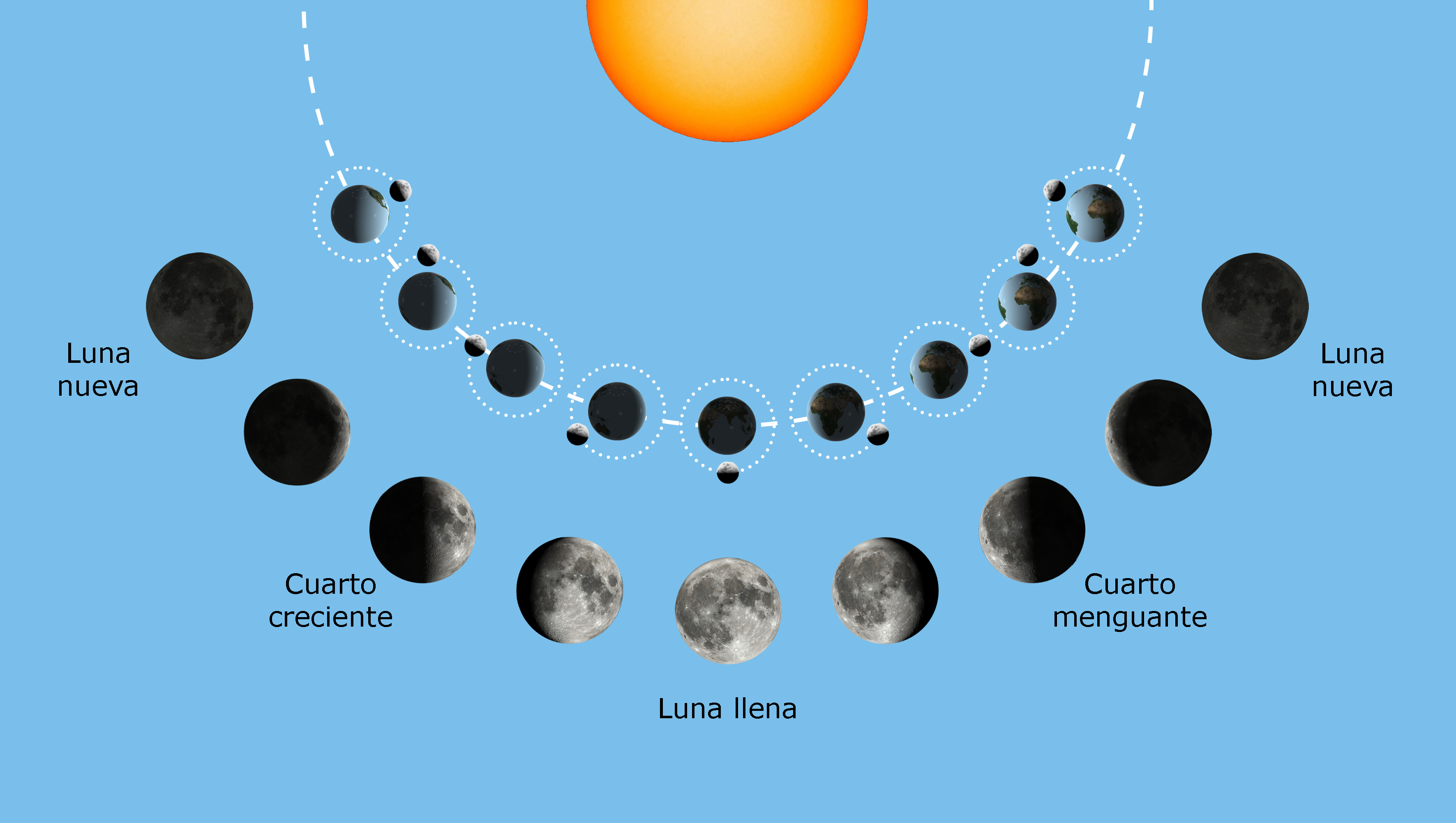
Our satellite is at an average distance of about 384,400 km from the Earth, although the actual distance varies along its orbit, which is slightly elliptical. This also results in variations in its apparent size in our sky. The Moon takes 27 days, 7 hours and 43 minutes to complete an exact orbit around the Earth (sidereal revolution), but 29 days, 12 hours and 44 minutes to return to the same configuration with respect to the Earth–Sun system (synodic revolution), since the Earth’s own orbital motion must also be taken into account. Over time, tidal forces between the Earth and the Moon have led to synchronisation between the Moon’s orbital period and its rotation period, meaning that it always shows us the same face. Depending on its position around the Earth and the illumination it receives from the Sun, the lunar phases occur, describing whether we see it fully illuminated (full moon), partially illuminated (waxing or waning Moon), or unilluminated and therefore difficult to perceive (new moon). These lunar phases have been used throughout human history in many cases as a means of measuring time.
The Moon plays a decisive role in conditions on Earth: it is the primary cause of the tides (with a significant but much smaller contribution from the Sun), and its presence stabilises the Earth’s axis of rotation, preventing abrupt seasonal changes. The tidal forces between the Earth and the Moon also cause a gradual slowing of the Earth’s rotation, lengthening the terrestrial day by about 17 microseconds each year, and a gradual recession of the Moon, whose distance from our planet increases by about 4 centimetres per year.
As we have repeatedly emphasised throughout this volume, eclipses are produced by alignments of the Sun, Earth and Moon: lunar eclipses occur when the Earth comes between the other two bodies, and solar eclipses when the Moon interposes itself and casts its shadow on the Earth. The fact that, as seen from Earth, the apparent angular sizes of the Moon and the Sun are similar allows some solar eclipses to be total, producing complete obscuration of the Sun’s visible surface.
Transits of Mercury and Venus
Transits occur when a planet with an interior orbit (that is, closer to the Sun) aligns with another planet with an exterior orbit (farther away) and the Sun. They can therefore be considered a special type of eclipse. In the case of the Earth, transits involve the inner planets, namely Mercury and Venus, which are seen passing in front of the Sun. Transits are much less frequent phenomena than solar eclipses, since the Moon, being much closer to the Earth than Mercury or Venus, has a synodic period (orbital period as observed from Earth) that is much shorter than that of these planets.
In a way analogous to what happens with solar and lunar eclipses, transits occur only when the innermost planet is at inferior conjunction, that is, aligned between the Sun and the Earth. For this to happen, the planet must be very close to one of the nodes of its orbit, which are the two points where its orbit crosses the plane of the Earth’s orbit, as only in this case does an almost perfect alignment of the three bodies occur.
The slight inclination of each planet’s orbit with respect to that of the others makes such alignments unlikely. This small inclination is sufficient for the inner planet, in most cases, not to pass directly in front of the solar disc, but instead above or below it. In the specific case of Mercury and Venus, the inclination of Mercury’s orbit with respect to that of the Earth is 7.0°, while that of Venus is 3.4°.
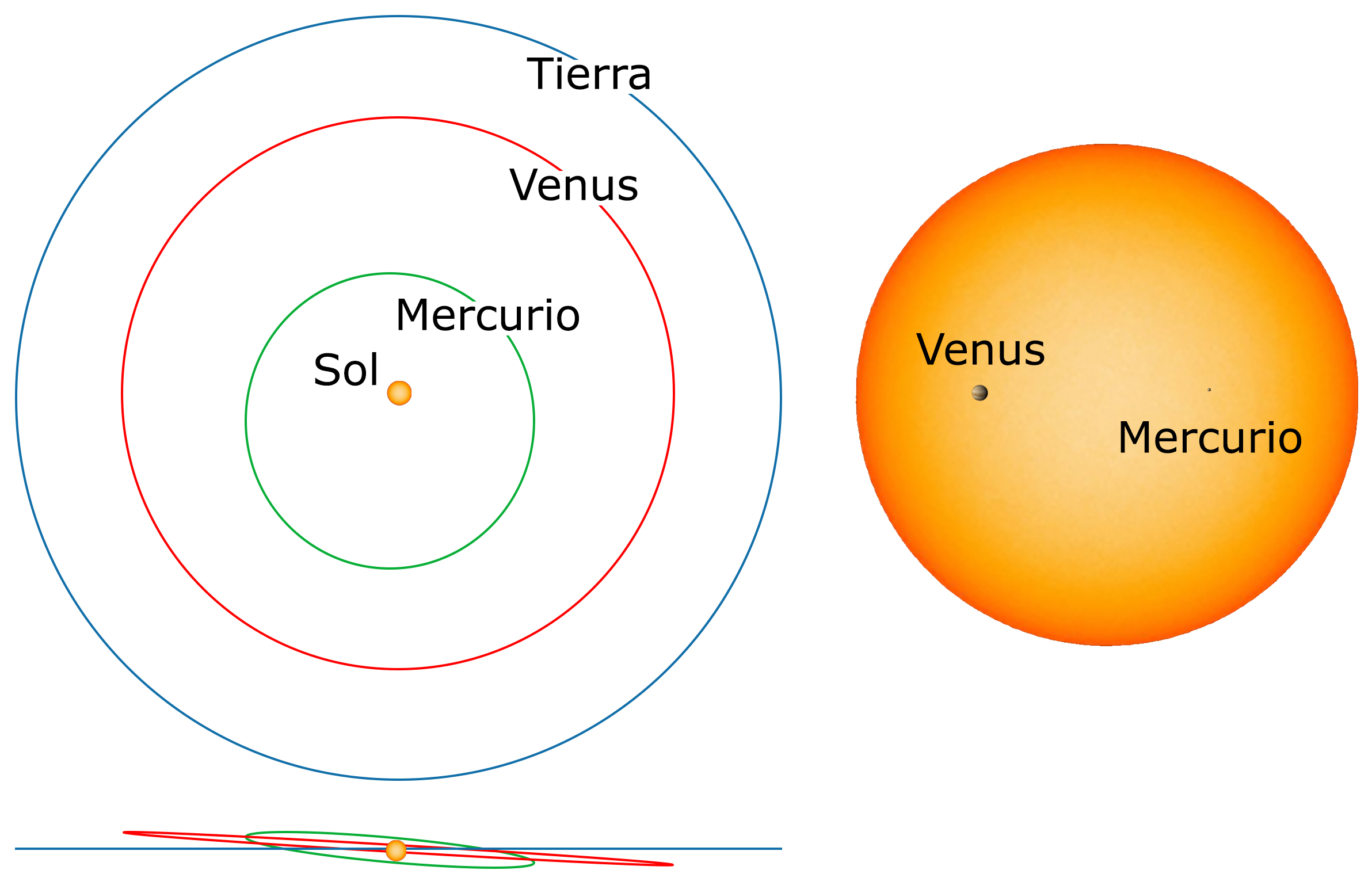
Although the inclination of Venus’s orbit (more than 3°) is smaller than that of Mercury (just over 7°), Venus’s smaller distance from the Earth during its crossings of the Sun means that it currently passes up to almost 9° above or below the solar disc, whereas in the case of Mercury this angular distance does not reach 5°. The Sun has just over half a degree of angular diameter (32′) as seen from the Earth.
The difference in the number of inferior conjunctions per century for these two planets is determined by their synodic periods (the time elapsed between successive reappearances of an object at the same position with respect to the Sun and the Earth). Mercury, being closer to the Sun, has a shorter period of 116 days and undergoes 315 conjunctions per century. Venus, by contrast, with a longer period of 584 days, has only 62 or 63. Considering only these two factors, it can be estimated that the frequency of transits of Venus is ten times lower than that of Mercury.
In 1631 a rare situation occurred, which happened again in 1769 and will not occur again until the end of the year 2611: a transit of both planets within the same year. However, both transits cannot occur on the same day, as the orientation of the line of nodes of Mercury and that of Venus do not currently coincide.
Transits of Mercury
The nodes of Mercury’s orbit occur around 10 November (ascending) and 8 May (descending). Transits therefore usually take place around these dates, with those occurring in November being more frequent. The ascending node occurs when a planet crosses the plane of the ecliptic from below to above. The descending node occurs at the opposite position, when it crosses the plane of the ecliptic from above to below.
Another characteristic that distinguishes the two types of transit is their duration when the planet passes across the centre of the Sun. Since the ascending-node transit occurs when Mercury is closer to the Sun, it moves faster, reducing the duration compared with descending-node transits, which occur when the planet is farther from the Sun. The difference in duration between the two can be slightly more than two hours: in May, transits can last almost eight hours, compared with about five and a half hours in November.
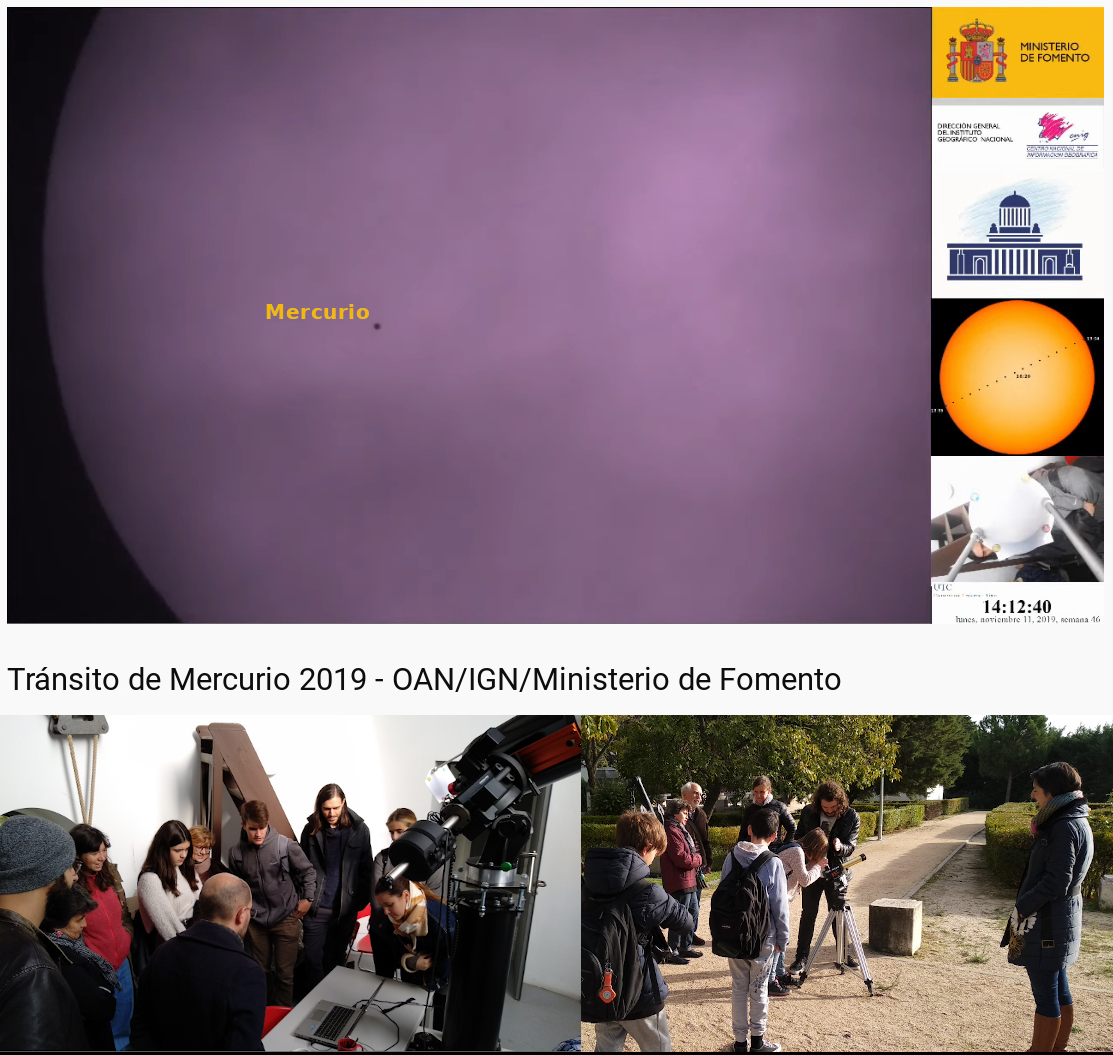
In the current century there will be a total of 14 transits, five in May and nine in November. Of these, five will be visible in their entirety from all Spanish territory; in six, only part of the transit will be visible, or it will be seen partially in some regions; and four will not be visible at all. The last occurred on 11 November 2019, and the next one, complete if we travel to the Balearic Islands, will take place on 13 November 2032. The next transit fully visible from all Spanish territory will not occur until 7 May 2049.
Observations of transits of Mercury carried out during the nineteenth century revealed small discrepancies with the calculated ephemerides, leading to the discovery of the anomalous advance of Mercury’s perihelion, which also affected the rest of its orbit. By extrapolating the available observations, it was concluded that Mercury’s perihelion and orbit complete a rotation around the Sun approximately every 227,000 years. Theoretical calculations using Newton’s laws, however, predicted a period of 240,000 years. This small discrepancy nonetheless revealed a mismatch between observations and Newton’s theory of gravitation, which attempts to explain it through the existence of other planets or asteroid belts proved unsuccessful. It was not until November 1915 that the physicist Albert Einstein was able to explain it, in what was probably his greatest scientific satisfaction, through the theory he was developing, known as the general theory of relativity, making it the first phenomenon to be explained by it. As mentioned in the section “Eclipses in history”, during Eddington’s 1919 eclipse, displacements of stellar paths were also measured during the eclipse, in agreement with the predictions of this theory.
Transits of Venus
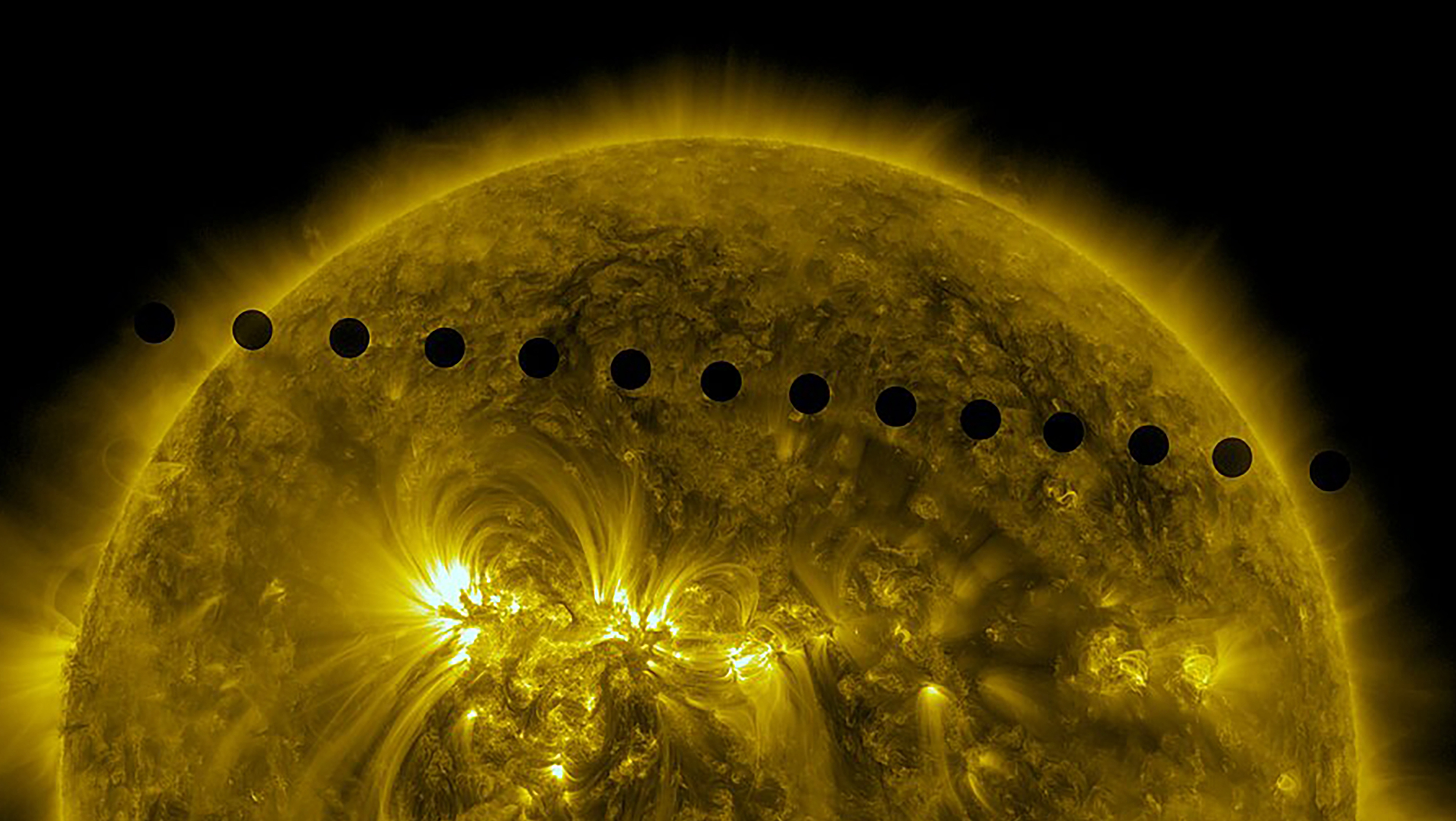
Transits of Venus are very rare phenomena, occurring on average twice every little more than a century. They usually occur in pairs separated by eight years, although they can also occur individually. Currently, intervals of 105.5 and 121.5 years alternate between successive pairs.
The last pair of transits of Venus took place on 8 June 2004 and 5 June 2012. The first was visible in all its phases from the entire Iberian Peninsula, but the second ended at sunrise in the eastern part of the Peninsula and was therefore barely visible. The next pair of transits will occur on 11 December 2117 and 8 December 2125. The first will not be visible from Spain, and the second will be visible at its beginning at sunset.
The nodes of Venus’s orbit are currently located in the first half of June (descending) and the first half of December (ascending), and there is very little difference in the frequency of transits occurring at either node. Ascending-node transits are slightly less probable because Venus is closer to the Earth and farther from the Sun, which means that on some occasions a single transit occurs rather than a pair. Excluding cases in which Venus grazes the solar disc without its entire projected path crossing the Sun, between the years −2000 and 6000 there will be 46 transits at the ascending node and 51 at the descending node.
The duration of a transit can range from 14 minutes to more than an hour. At the ascending node, the maximum duration of a central transit is just over eight hours. The inclination of Venus’s path across the solar disc is about 9°.
Historical transits
Just as eclipses throughout history have been a source of scientific learning, the observation and measurement of transits have also been used as a tool to determine the distances and sizes of various objects in the Solar System.
The earliest attempts to measure the size of the Earth are attributed to Eratosthenes of Cyrene (around 240 BC), who estimated the Earth’s circumference by comparing the length of shadows observed on the same day in Alexandria and another city located on the Tropic of Cancer, where he knew no shadow was cast. Aristarchus of Samos, a contemporary of Eratosthenes, proposed geometric methods based on the relative positions of the Moon, the Sun and the Earth at different moments of the lunar phase to measure their relative distances and sizes. Aristarchus incorrectly obtained that the distance to the Sun was only 19 times greater than the distance to the Moon, which led astronomers for centuries to adopt an erroneous value for the Earth–Sun distance, as his result was widely accepted as correct.
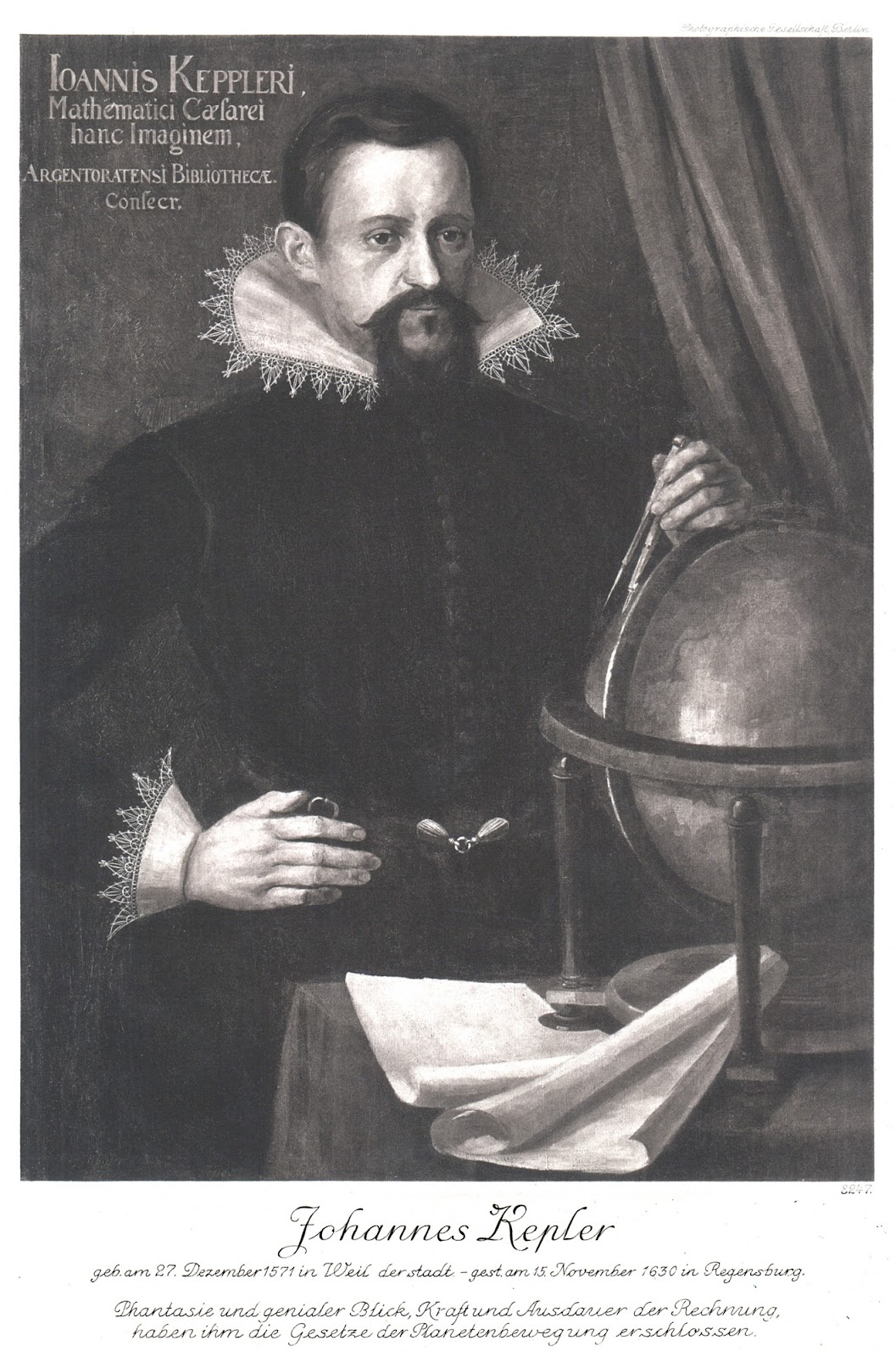
In the seventeenth century, the astronomer Johannes Kepler introduced the relationship between the orbital period of each planet around the Sun and the size of its orbit in his third law, according to which the square of the period is proportional to the cube of the size of the orbit. At that time, the existence of planets farther from the Sun than Saturn was unknown. However, the orbital periods of the planets up to Saturn were known, and therefore, thanks to Kepler’s third law, deducing the sizes of the remaining orbits required knowing the size of only one orbit, for example by determining the distance to the Sun. Kepler also concluded that the method proposed by Aristarchus was not sufficiently precise and that the distance to the Sun had to be at least three times greater than previously assumed.
Kepler initiated the method that made use of transits to measure the relative sizes of planets with respect to the Sun, but due to errors in his ephemerides calculations, the first successful application of this method was carried out by two other astronomers. They determined that the angular size of Mercury is one hundred times smaller than that of the Sun, and that of Venus twenty-five times smaller — a value very similar to that obtained directly by Galileo using a telescope.
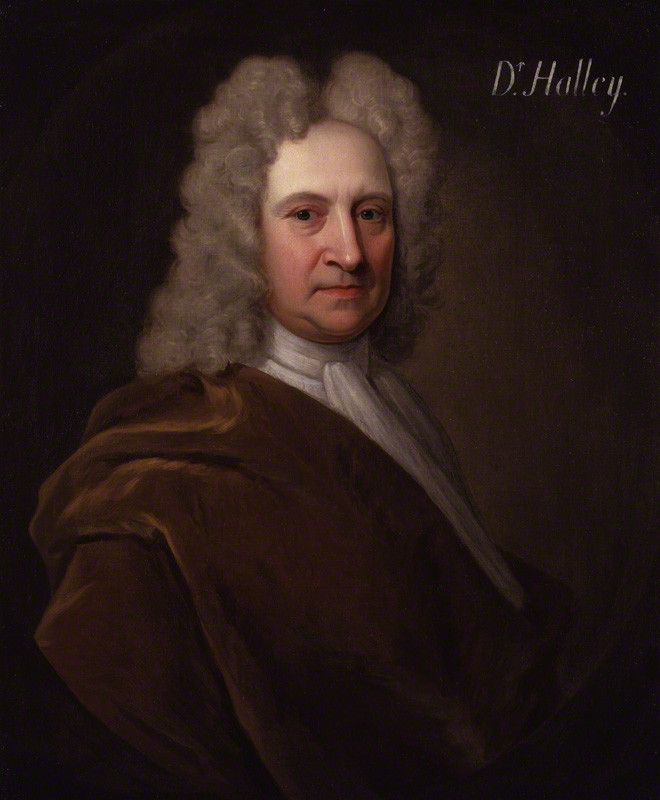
In the same century, Edmund Halley attempted to determine the distance to Mercury by combining his own measurements with those obtained by another astronomer during the transit of Mercury on 7 November 1677, but without success. For decades, he argued that the best method to measure the distance to the Sun was through such measurements during transits, and that it was more convenient to carry them out during a transit of Venus, as this facilitated angular measurements and observation of the planet against the solar disc.
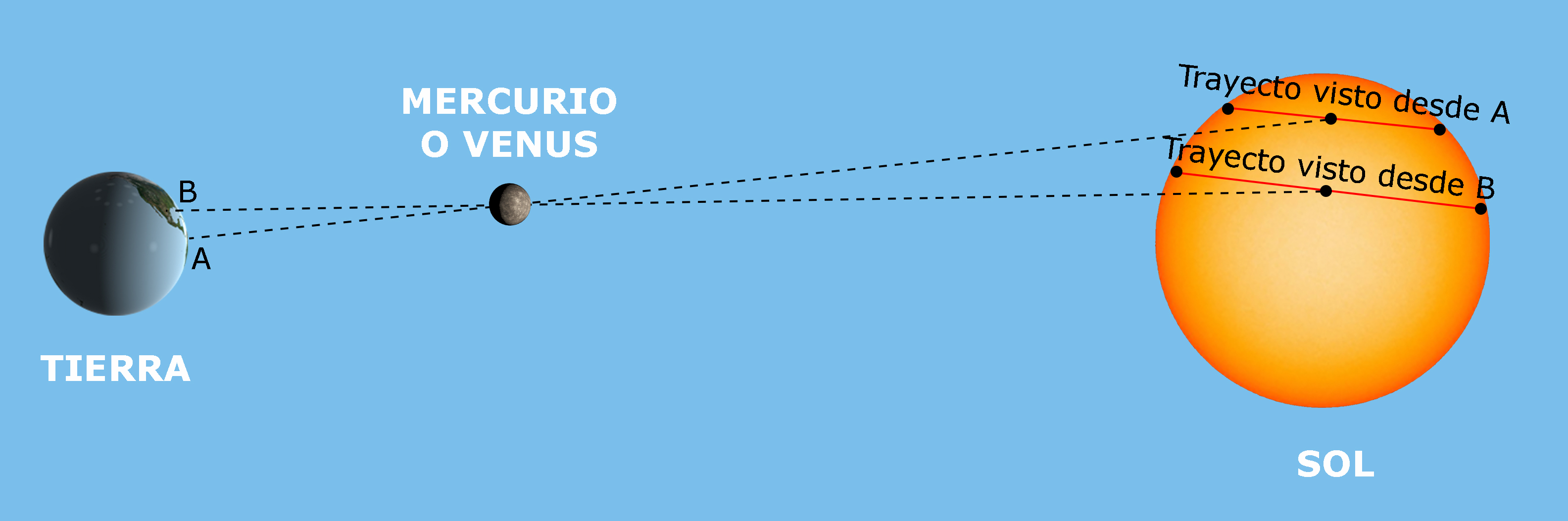
His method consisted of measuring the duration of the transit from locations at different latitudes. At each site, different time intervals would be measured with the precision allowed by the pendulum clocks of the time (sufficient to distinguish different trajectory lengths). The difference in trajectory lengths would make it possible to deduce the angle between the two paths and, knowing the geographical distance separating the observers, the distance to the planet could be calculated. Once this distance was known, and using the relative distances of the planets from the Sun (given by Kepler’s third law), it would be possible to determine the absolute distance from the Earth (and Venus) to the Sun.
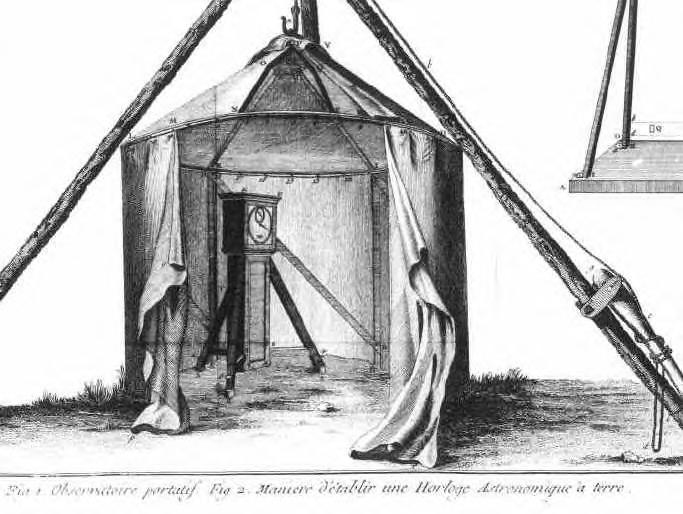
The first transit of Venus for which this method could be tested was due to occur on 6 June 1761, followed by another in 1769. Although Halley had died by then, he proposed different observing sites from which to observe the transit, suggesting collaboration between various European countries, which could carry out measurements from their colonies around the globe. This became the first worldwide scientific project in history, both in terms of expeditions across the planet and the nationalities of the astronomers involved. In total, around 120 astronomers were stationed at more than 60 locations. Even countries at war agreed not to interfere with the expeditions. However, the reality was less ideal: several astronomers, such as the Frenchmen Pingré and Le Gentil, or the Englishmen Mason and Dixon, were pursued, attacked and even captured by enemy fleets. The Frenchman Chappe had to complete part of his journey by sledge after losing his ship. The most unfortunate experience was endured by Le Gentil, who failed to reach his destination and, besieged by various colonial conflicts during his journey, was forced to observe the transit from his ship at an unknown position at sea. Despite all this effort, the result was a distance to the Sun with an uncertainty that was too large (12%), yielding values between 124 and 159 million kilometres.
The next transit of Venus occurred on 3 June 1769 and was observed under better conditions, with lessons learned from the previous attempt. More than 150 astronomers were distributed across some 80 locations. One of these missions was entrusted to the navigator James Cook, who undertook his first voyage from England to Tahiti, carrying an astronomer to observe the transit and a naturalist to document it. Although only part of the observations could be carried out, and despite various difficulties and uncertainties in analysing the data obtained, the result yielded a range of values for the Earth–Sun distance between 149 and 157 million kilometres, reducing the previous uncertainty. At that time, it was agreed to adopt the mean of the two extreme values as the distance to the Sun, namely 153 million kilometres, albeit with still unsatisfactory uncertainty. The German astronomer Johann Franz Encke resolved this issue when he re-analysed the data using the method of least squares invented some years earlier by Johann Carl Friedrich Gauss, obtaining a mean value of 153.5 ± 0.7 million kilometres for the distance to the Sun.
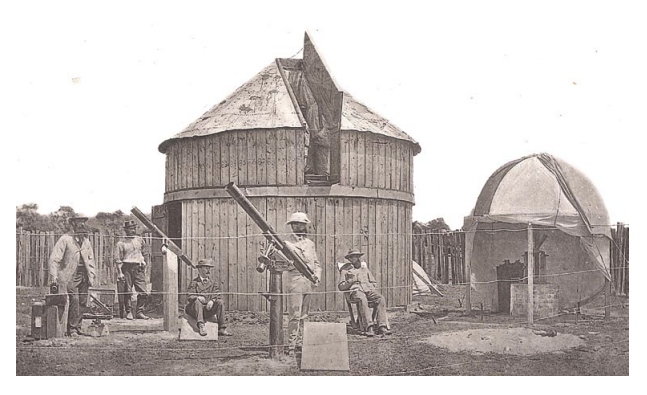
During the nineteenth century, it was decided to carry out new observational campaigns for the next two transits of Venus, on 9 December 1874 and 6 December 1882, as other methods were yielding a value of 147 million kilometres for the distance to the Sun. Improvements in instrumentation and the professionalisation of astronomers prompted significant investment of resources in the first transit, once again leading to numerous expeditions to perform measurements. However, many problems were encountered, including data loss and discrepancies between individual measurements. As a result, fewer expeditions were organised for the second transit, which was mainly observed from various countries in Europe and the United States. The astronomer William Harkness compiled all the data from the two latest transits in the United States and obtained a value of 148.8 ± 0.2 million kilometres for the distance to the Sun. Taking into account data from the previous century as well, and with improved values for the geographical longitudes of the observation sites, the American astronomer Simon Newcomb obtained a similar result, 149.6 ± 0.4 million kilometres.
By the end of the nineteenth century, the distance to the Sun had been measured with a precision of 1 in 1,000. In the twentieth century there were no transits of Venus, but various methods made it possible to significantly increase the precision of the Earth–Sun distance. Whereas in the nineteenth century the uncertainty amounted to hundreds of thousands of kilometres, today the distance is known with a precision of 3 metres, an improvement achieved over the course of the last century. In 2012, the International Astronomical Union adopted the “astronomical unit” (au) as the unit of length for measuring distances within the Solar System and to other stars, with a value of 149,597,870,700 metres.
Exoplanet transits
Over the past few decades, our census of known planets has extended far beyond the Solar System. In 1992, radio astronomers Aleksander Wolszczan and Dale Frail discovered three planets orbiting a pulsar — that is, a rapidly rotating neutron star — and just a few years later, in 1995, astronomers Michel Mayor and Didier Queloz confirmed the detection of the first planet outside the Solar System orbiting a main-sequence star, that is, one analogous to our Sun in evolutionary terms. These first distant planets, known as exoplanets because they do not belong to our own planetary system, inaugurated a list of detections that has increased rapidly over the years. At the time of writing this volume, at the beginning of 2025, there are more than 5,800 confirmed exoplanets. The growth in this number is directly related to the existence of space missions and telescopes that are specifically dedicated, or devote a significant fraction of their observing time, to the search for or characterisation of exoplanets. Examples include the space telescopes Kepler and TESS (NASA), CoRoT (CNES/ESA), Cheops (ESA), and the future European missions PLATO and Ariel (ESA).
Improvements in our observational capabilities have allowed us to broaden the range of physical properties of the exoplanets we are able to detect. Whereas the first detections, such as that of 1995, corresponded to very massive planets orbiting very close to their stars, we now observe planets even comparable in size to the Earth. The discovery of exoplanets has also strongly stimulated the search for extraterrestrial life, now that we are aware of the large number of planets with some similarities to the Earth that exist in our galaxy. In particular, the study of exoplanetary atmospheres is being developed, as these can provide key information on the conditions present on their planets, and may even reveal signatures produced by the existence of life.
There are several methods for detecting exoplanets, and one of the most successful is the method of exoplanet transits. In the Solar System, we speak of a transit when a planet passes, from the observer’s point of view, in front of the Sun, as is the case for the transits of Mercury and Venus described in this chapter. An analogous phenomenon occurs when an exoplanet passes in front of the star it orbits, from our point of view, thereby obscuring a certain fraction of its surface and reducing its brightness. In general, we are dealing with stars that are so distant and planets so small that we cannot directly observe the planet carrying out the transit, but we are able to detect the slight decrease in the star’s brightness that is produced as a result.
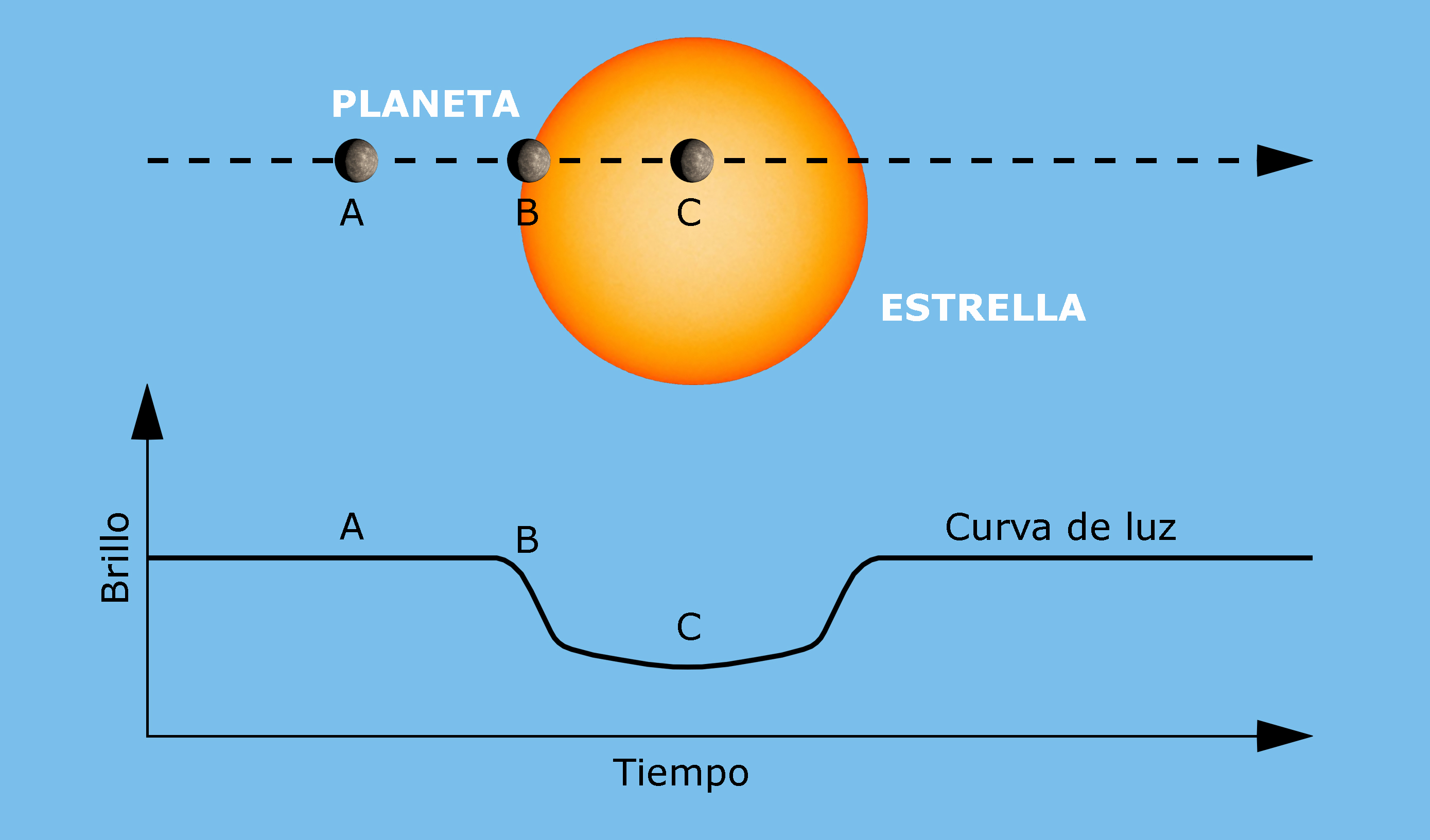
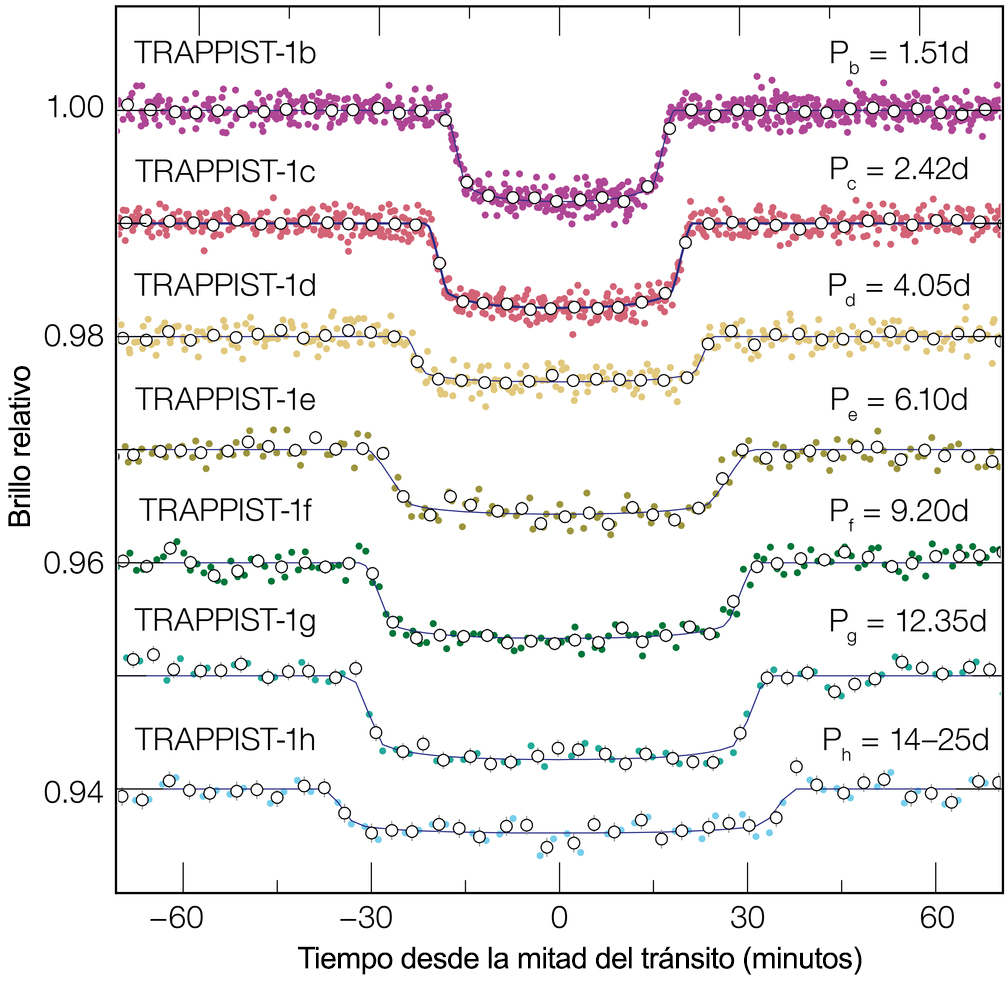
The percentage decrease in the star’s light depends on the relative sizes of the star and the planet (in other words, on the fraction of the stellar surface that the planet obscures), and therefore provides information about the size of the planet. The duration of the transit gives information about its orbital period and hence about its distance from the star (quantities related through Kepler’s third law). In the image accompanying this text, we see the light curves generated by the transits of the seven planets orbiting the red dwarf star TRAPPIST‑1. Larger planets produce deeper transits, and planets farther from the star give rise to longer transits.
The transit method has a significant observational bias, based on the fact that it is only applicable to planetary systems oriented “edge‑on” with respect to the Earth — that is, systems in which we are located almost exactly in the orbital plane of the planet or planets being studied. The probability of this is low, so failing to detect a planet via transits does not rule out the existence of planets around a star, and we can currently assume that there are many exoplanetary systems that cannot be studied using this technique. Despite this limitation, the transit detection method has so far been the most successful, because extensive sky surveys have been carried out searching for stars that exhibit periodic decreases in brightness that could be produced in this way. To date, more than 4,300 planets have been detected using this method. These extrasolar “eclipses” therefore provide a scientific tool of great current relevance, allowing us to decisively expand the frontiers of our knowledge.
Phenomena analogous to eclipses
In very general terms, we could define a solar eclipse as the phenomenon by which the light of the Sun is totally or partially obscured from the view of an observer (real or hypothetical) by the interposition of a nearby celestial body between the Sun and that observer. This is a very broad definition, broader than those found in dictionaries or even in astronomy textbooks, which may suffer from a certain degree of geocentrism.
Even at the beginning of this volume, we defined a solar eclipse as the event that occurs when the Moon partially obscures the Sun as seen from the Earth. Obviously, this definition does not take into account an observer in orbit, who sees the Sun eclipsed every hour and a half, with the Earth itself being the body interposed between the Sun and the observer. Nor does it take into account the situation that occurs on the Moon, when it enters the Earth’s shadow: this phenomenon, which for a terrestrial observer is called a lunar eclipse, would for a hypothetical lunar observer receive no other name than that of a solar eclipse.
Furthermore, there is no reason to restrict this phenomenon to the Earth–Moon system. In particular, an imaginary colonist on any of Jupiter’s large moons would frequently see the Sun eclipsed behind the enormous gaseous body of the planet Jupiter. In our view, it would be astronomically incorrect not to allow the use of the term “solar eclipse” in such a situation, even if the concept was originally coined to describe a phenomenon first studied from the surface of the Earth.
Of course, all generalisations have their nuances, and this is no exception. Clearly, the phenomenon of an eclipse is particularly striking and impactful when the Sun is totally or largely obscured. This requires that the body obscuring the Sun be close to the observer, since only then can the obscuration be noticeable. With this requirement of proximity, we exclude transits — phenomena in which an observer sees a distant planet pass in front of the solar disc — which were described in Section 5.4 of this chapter.
It would be possible to generalise the definition of an eclipse even further, not restricting ourselves to a single star, the Sun, but considering the occultation of any star by any other opaque body that interposes itself, whether nearby or not, as in the case of a planet. However, this leads us to a concept that already has a specific name: occultation. For example, one speaks of the occultation of a star by the Moon, by a planet or by an asteroid. The term “occultation” is even more general, as it also includes occultations of celestial bodies by the Sun: in this case, the Sun is not the object being occulted, but rather the body interposed between the occulted object and the observer. Thus, we can say that a solar eclipse is a particular case of occultation, in which the bright star being occulted is the Sun and the body that obscures it is close to the observer.
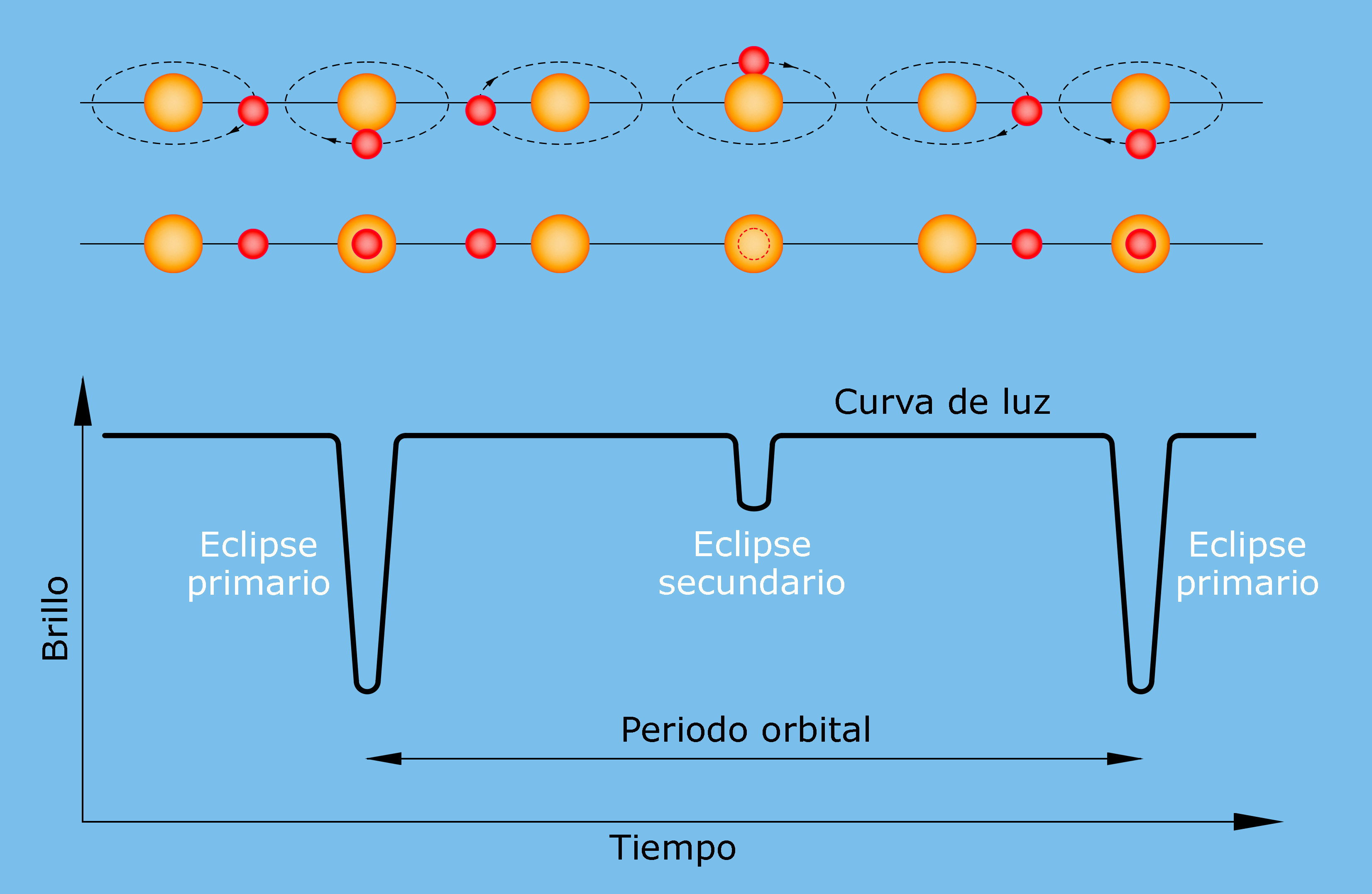
Finally, one may mention the case in which one bright object obscures another bright object, as occurs in so-called eclipsing binary stars. The total brightness is seen to decrease when one star passes in front of the other from the point of view of a given observer. If we observe such a stellar system over time and obtain its light curve, as described in the previous section on exoplanet transits, we see a periodic curve with intervals of maximum brightness interspersed with two dips where the brightness decreases. These dips correspond to the phases in which one star begins to obscure the other until a minimum is reached (when the obscuration is greatest), after which the brightness increases again back to the maximum. One of these minima, the deeper one, occurs when the brighter star is obscured by its fainter companion; the shallower minimum occurs when the fainter star is obscured by the brighter one.
So far, we have also discussed transits across the face of the Sun that can be observed from Earth, but if our colonising imagination were to visit our Solar System, it could observe different transits. For example, from the surface of Mars one could see transits of Mercury, Venus and the Earth. However, it should be borne in mind that as we move farther away from the Sun, its angular size, as well as that of the inner planets, decreases. For instance, from Jupiter the Sun appears about six times smaller than from Earth, and from Uranus about twenty times smaller. If we focus on the angular size of the transiting planet, the most interesting case is the transit of Venus as seen from Earth. In second place is the transit of Jupiter as seen from Saturn, and in third place that of the Earth as seen from Mars.
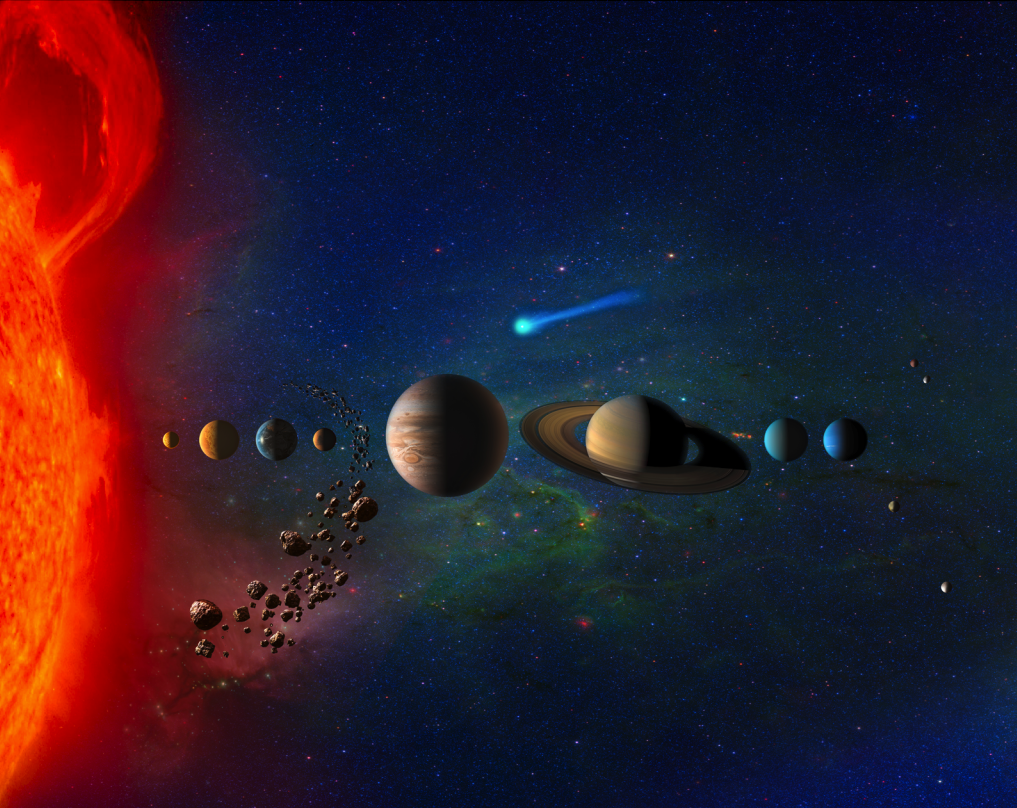
The closer a planet is to the Sun, the less time it takes to complete an orbit and, therefore, the more frequent the conjunctions with the planet from which it is observed. Moreover, the farther the observer is from the Sun, the less the inclination of the inner planet’s orbit affects the likelihood of a transit being prevented. For all these reasons, transits are more frequent the closer the transiting planet is to the Sun and the farther away the observing planet is. For example, from Jupiter twice as many transits of Mercury can be seen as from Earth. On the other hand, the farther the planets are from the Sun, the more slowly they orbit and, consequently, the lower their rate of conjunctions and the lower the frequency of transits. For instance, during the average time interval between two transits of Jupiter seen from Uranus, more than 50 transits of Mercury seen from Earth occur.
As for the duration of a transit, this is longer the farther the inner planet is from the Sun in its orbit, since according to Kepler’s third law, the greater the distance, the slower the motion. The maximum duration of the transit of Venus as seen from Earth is 7.9 hours, while that of the Earth as seen from Mars would be 9.5 hours.
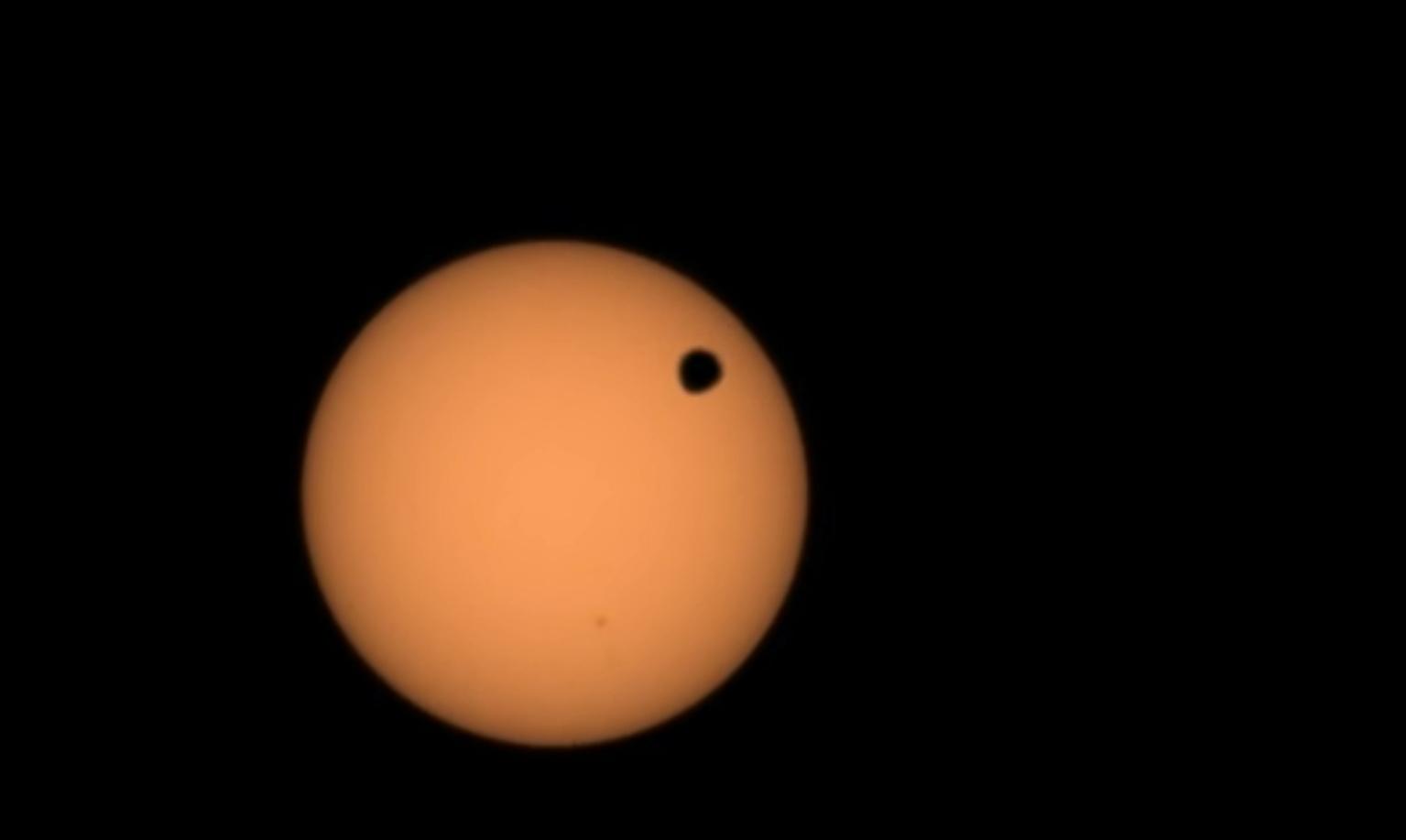
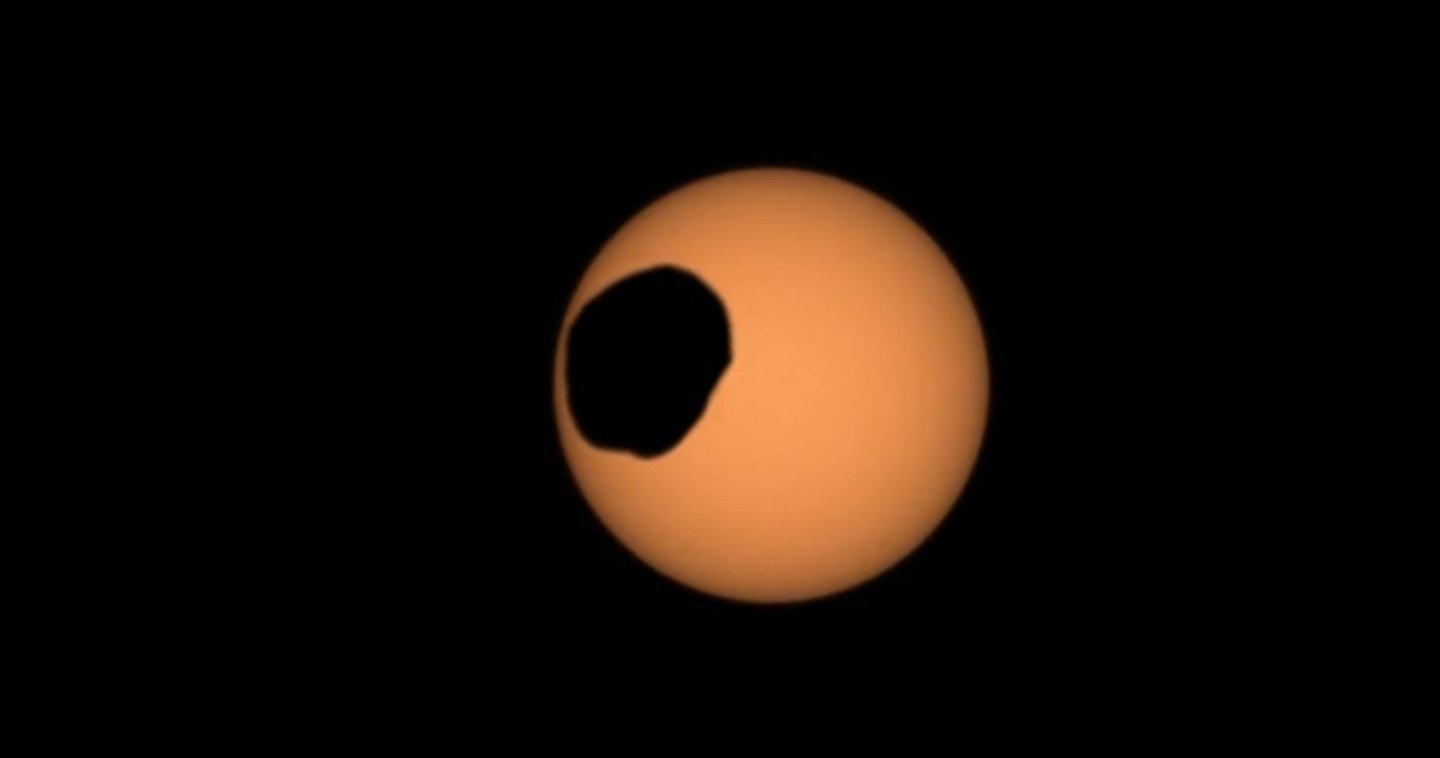
We are living in an exciting era in which this last type of observation can be carried out from robotic probes, such as the observation of the transit of Mercury on 28 October 2023 made from the Perseverance rover on the surface of Mars (and those of its moons Phobos and Deimos in February and January 2024). In the twenty-first century there will be approximately twice as many transits of Mercury as those visible from Earth. Those of Venus are also much more frequent. This is because the greater distance of Mars reduces the effect of the inclination of the orbits of Mercury and Venus; moreover, the synodic period (between inferior conjunctions with Mars) is shorter. As mentioned above, from this planet, in addition to transits of Mercury and Venus, transits of the Earth can also be observed, occurring on average three times every two centuries. On 11 May 1984 there was a transit of the Earth visible from Mars, and the next one will take place on 10 November 2084.